Published:
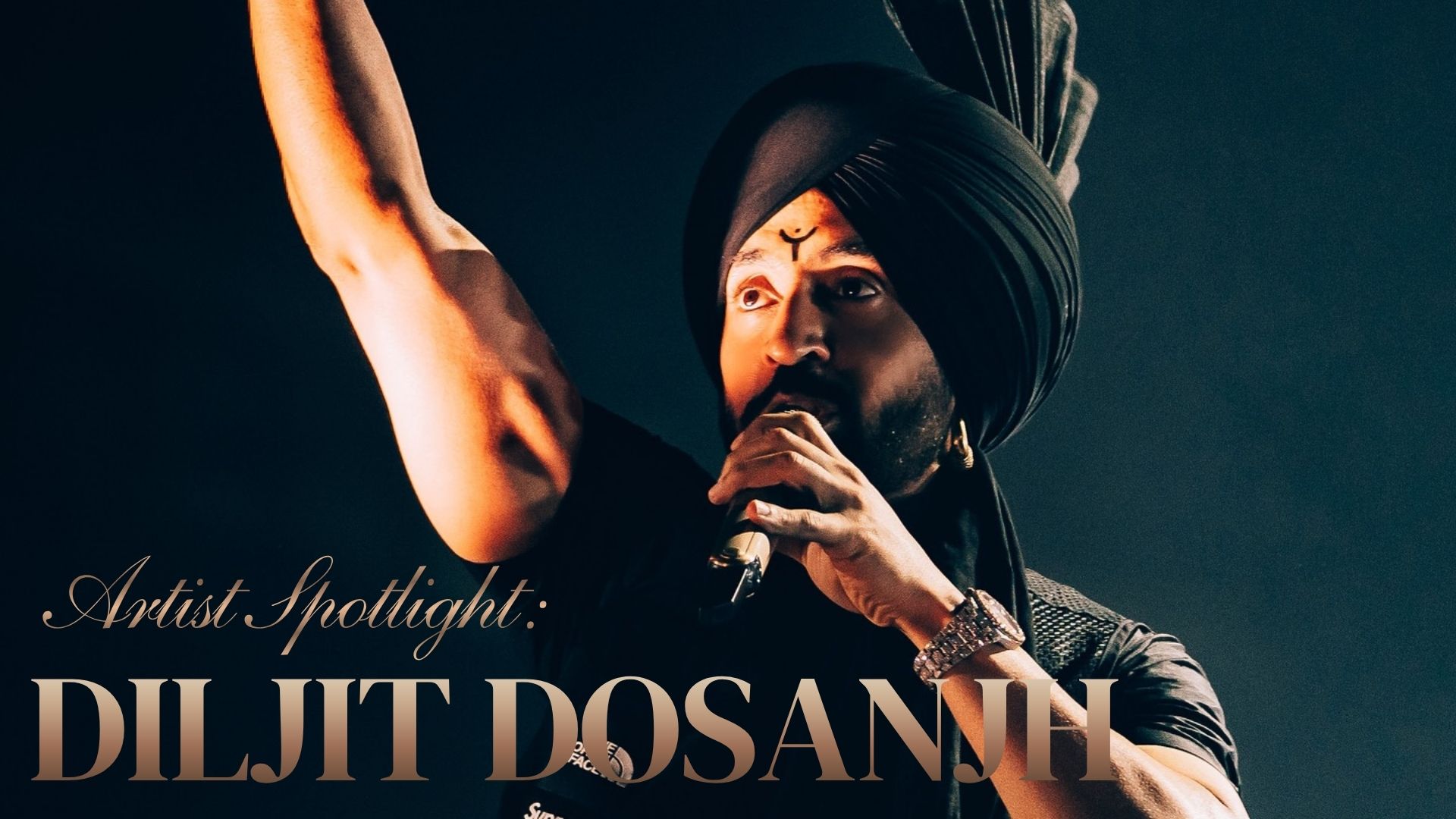
Diljit Dosanjh: The Man Who Brought Punjab to the World
A Global Voice That Never Left Home
There’s a moment from Coachella 2023 that tells you everything you need to know about Diljit Dosanjh. Standing on one of the most coveted stages in global music, sharing a weekend lineup with Blackpink, Charli XCX, and Kid Laroi, he looked out at tens of thousands of people who mostly didn’t speak his language and said, in Punjabi: “Now it has been written in history. Punjabi aa gaye hum Coachella.” The crowd erupted.
He didn’t translate, he didn’t explain, he didn’t dilute that moment.
That moment crystallized a career that has always operated on the same principle. Punjabi culture, and Indian culture as a whole, doesn’t need to apologize for itself or adapt for wider audiences. The audience will come. And for over two decades, they have.
Where It Began: Gurdwaras, Grit, and Ludhiana
Diljit Singh Dosanjh was born on January 6, 1984, in Dosanjh Kalan, a village so small it barely appears on maps, tucked into Jalandhar district in Punjab. His father drove buses for Punjab Roadways. His mother was a homemaker. There were no entertainment connections, no shortcuts, and no safety net.
He moved to Ludhiana at a young age, where he began singing kirtan in gurdwaras. That early environment shaped how he performs even now. It was never about spectacle; it was about connection and sincerity.
He began recording in 2002, and his debut album, Ishq Da Uda Ada, was released in 2003. His name, officially Daljit, was changed to Diljit at the label’s suggestion, a small rebranding that would eventually circle the globe.
Building the Foundation, From Smile to The Next Level
Breakthrough didn’t come overnight. Smile (2005) was the album that first made Punjabi audiences pay real attention. It was contemporary enough to feel fresh and rooted enough to feel authentic. Chocolate (2008) and The Next Level (2009), a collaboration with Yo Yo Honey Singh, followed, expanding his reach through a rapidly commercializing scene.
What defined this period wasn’t any single album; it was the consistency. Diljit was slow-burning his way to the top, building an audience that came because they recognized something real. Songs like “Proper Patola” and “Do You Know” became the kind of tracks that play at weddings in Amritsar and house parties in Brampton simultaneously. By the time G.O.A.T. dropped in 2020, landing him on Billboard’s Social 50 and the Canadian and UK Asian Charts, the confidence in the album’s title felt less like a boast than a statement of fact.
Film: Not a Crossover, a Statement
Most artists use film as a career strategy. For Diljit, it’s always been a moral choice.
He built his box-office credibility in Punjabi cinema first. The Jatt & Juliet franchise became a cultural institution, with the third installment (2024) landing as the second-highest-grossing Punjabi film of all time. But Punjab 1984, set against the anti-Sikh massacres in Delhi, revealed what he was actually capable of. It won the National Film Award for Best Feature Film in Punjabi.
His Bollywood debut, Udta Punjab (2016), hit hard enough that the censor board demanded 89 cuts. The Bombay High Court overruled them. The film earned him a Filmfare Award and established a pattern: Diljit takes stories that powerful people would rather not see told. Jogi (2022) put him inside the 1984 massacre. Punjab ’95, still fighting 127 censor-board cuts, has him playing human rights activist Jaswant Singh Khalra, for whom he grew his beard for months rather than use a prosthetic.
Then Amar Singh Chamkila (2024), on Netflix, directed by Imtiaz Ali and scored by A.R. Rahman, earned 88% on Rotten Tomatoes. He played Punjab’s “Elvis,” a Dalit folk singer killed for his music, and sang all 15 songs live. The casting, critics noted, was its own statement. Diljit and Chamkila occupy the same space in their respective eras.
The result through all of these milestones is that Hindi cinema now writes turbaned Sikh characters who aren’t caricatures. He entered that space and refused to be reduced, and his impact has changed Bollywood forever.
G.O.A.T., Global Charts, and the Music That Crossed Over Without Compromise
In parallel with his film work, his music catalog continued to expand in ambition and reach.
International collaborations have placed his work in direct conversation with global pop ecosystems with projects with Saweetie (“Khutti”), Jackson Wang (“BUCK”), NLE Choppa (“Muhammad Ali”), and, most recently, Ed Sheeran and Sia. In each case, the Punjabi voice remains the anchor. There is no “international version” of Diljit. The Diljit you hear on a global collab is exactly what you hear on Punjabi stages.
When he performed “Born to Shine” and “G.O.A.T.” on The Tonight Show Starring Jimmy Fallon in June 2024, he became the first South Asian artist to do so, and Jimmy Fallon introduced him as “the biggest Punjabi performer on the planet.” It was a line that would have seemed implausible ten years earlier.
Spotify data also tells a remarkable story around all of this. Consumption of Indian music on the platform rose 2,000% from 2019 to 2024. Diljit has been at the front of that wave, not surfing it, but generating it alongside other Indian legends.
Live Performance: The Moment the Records Fell
The Coachella performance in April 2023 was the first by any Punjabi artist in the festival’s 24-year history. He prayed before walking onstage, spoke to the crowd in Punjabi, and performed for both weekends. Gurdas Maan, the godfather of Punjabi folk, posted his congratulations, and music history was changed forever.
What followed was a full-scale assault on records. According to Warner Music Group, the Dil-Luminati Tour sold over 742,000 tickets worldwide, making it one of the largest tours by an Indian artist to date. BC Place in Vancouver drew 50,000 fans in a single night. The global gross hit $101 million.
In Australia, Diljit Dosanjh made history in October 2025 as the first Indian artist to sell out stadium shows nationwide during his Aura World Tour. He sold over 90,000 tickets in six cities, marking the biggest Australian tour by an Indian performer. Melbourne’s AAMI Park sold out within hours, while Sydney’s CommBank Stadium drew over 30,000 fans.
The Aura World Tour has continued that momentum in North America, selling out MSG and the Chase Center and expanding a fanbase that has long since outgrown categorization by diaspora.
Platform, Principle, and Political Courage
When the 2020–21 farmers’ protests broke out at Delhi’s borders, most of Bollywood went quiet. Diljit was vocal, public, and unwavering. He was labeled anti-national, received death threats, and did not back down. His public exchange with Kangana Ranaut, who had attacked protest supporters, was handled with composure, earning admiration well beyond his existing fanbase.
In interviews and public conversations, he has spoken about the 1984 anti-Sikh violence and has continued to support Sikh and Punjabi communities, even while facing criticism and pushback. In Bollywood, that kind of directness is rare. In a turbaned Sikh actor still building his mainstream career, it was, and still is, extraordinary.
His NGO, Saanjh Foundation, “saanjh” meaning amity, his own family name, supports underprivileged children and seniors through orphanages, elder care, and youth mentorship programs.
What It All Means For South Asian Representation
For generations, South Asian identity in mainstream global entertainment was conditional. It required softening, translating, and assimilating. It happened through exceptional individual talent, which was celebrated despite their backgrounds. The culture, the language, and the religion were usually diluted.
Diljit Dosanjh represents something different. He built global reach by moving in the opposite direction: diving deeper into Punjabi identity, not away from it. His turban is not a detail. His language is not a limitation. His faith is not an obstacle to mainstream access. They are, and always have been, the core of his brand and identity.
At the 2025 Met Gala, a Vogue poll voted Diljit the best-dressed celebrity of the evening. He wore what he always wears, a turban, a traditional Punjabi silhouette, his own identity. Global visibility hasn’t softened his aesthetic. If anything, it has sharpened it.
For Punjabi and Sikh diaspora communities in Canada, the UK, the US, and Australia, that visibility carries weight that’s hard to overstate. It places Punjabi language and Sikh identity in the same spaces as Beyoncé and the Met Gala as equals.
Over two decades, without compromise, he has done exactly what one writer described as his mission: freed Sikh identity from its stereotypes and shown the world a confident, globe-trotting Punjabi who never stopped being rooted in his village.
What’s Next
With Border 2 (2026) completed and a new Imtiaz Ali collaboration in post-production, Diljit shows no sign of coasting. The Aura World Tour continues through 2026, hitting arenas and stadiums throughout North America, including Vancouver, Toronto, New York, Atlanta, and more, with MSG and the Chase Center selling out, drawing massive Ticketmaster queues. A fanbase that started in diaspora living rooms now fills the same venues as the biggest artists on the continent.
The concerts are massive, but the Punjabi stays. The films are prestigious, but the stories remain political. The collaborations are global, but the identity is unchanged.
For twenty-plus years, the entertainment industry has implicitly asked him to make himself easier to digest. He has consistently declined, without drama or exception.
That choice is the career. And the career has become history.
Follow the Tour with Sanskar Savvy
At Sanskar Savvy, we celebrate artists who don’t just participate in culture; they reshape it. Diljit Dosanjh is one of the clearest examples of what that looks like in practice.
His Aura World Tour is one of the most talked-about runs of the year, and we are covering every stop. For artist spotlights, behind-the-scenes stories, interviews, and contest updates, stay close to the Sanskar Savvy community as we follow this one all the way through.
For more on the latest tours, see our announcement for Anuv Jain’s Dastakhat World Tour.
Want to work with us? See how you can partner with us!
Follow us on Instagram, Facebook, LinkedIn, and YouTube to keep the celebration going. Have an artist or tour you want us to cover next? Drop us a tip, we’re always listening.