Published:
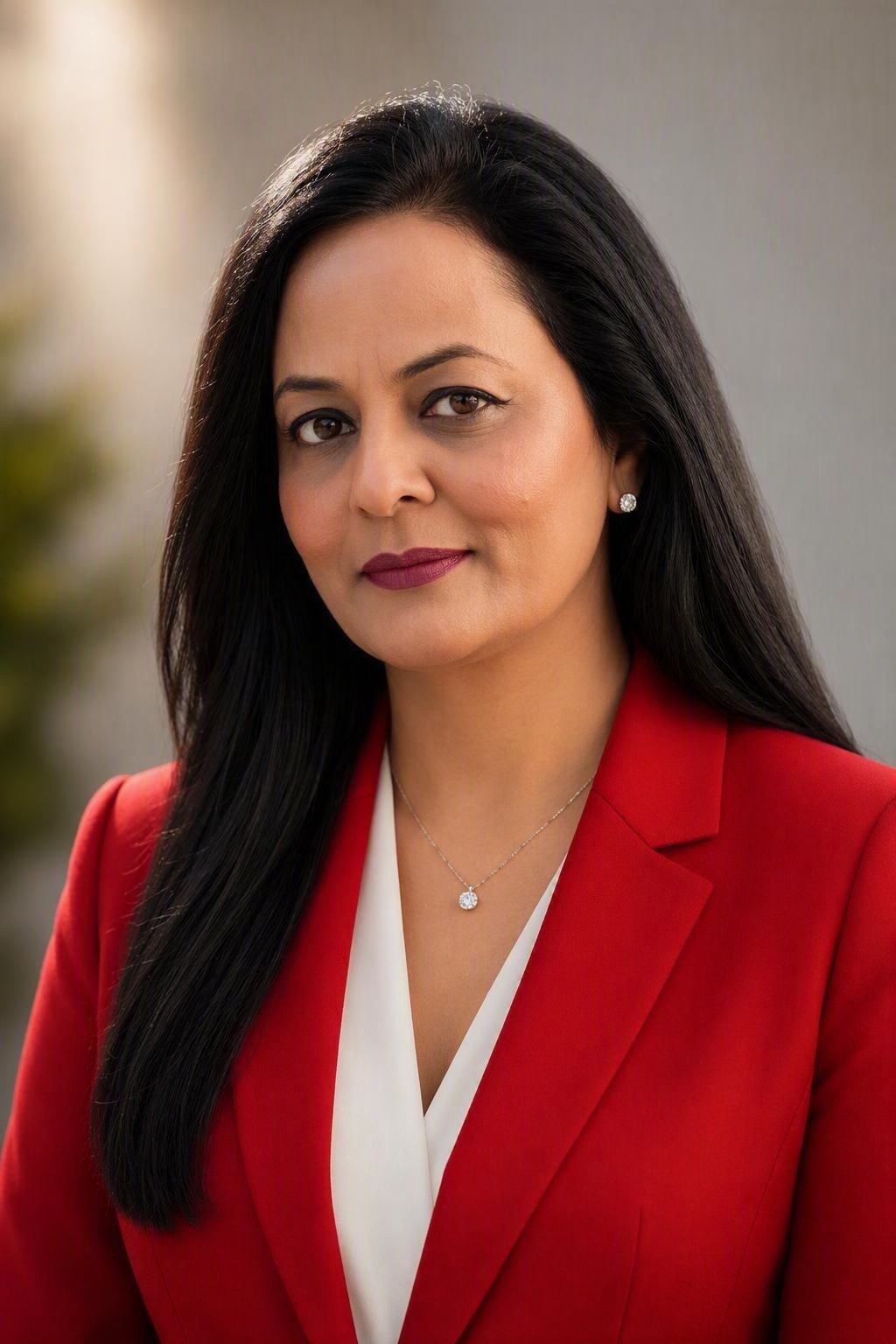
Bijal Shah on What Children Notice and What Families Choose to Change
Children notice who gets asked to help around the house. They notice who receives credit for being smart, who sits down to eat first at a family gathering, and which traditions adults take the time to explain. A moment that seems routine to a parent can shape how a child understands gender, family, culture, and her own place within all three.
Author Bijal Shah has spent years thinking about those moments, first by looking back at her own childhood and later through the stories she writes for other families. Her books examine everyday gender biases, South Asian festivals and cultural identity, while her memoir in progress asks her to return to some of the more complicated experiences that shaped her as an adult.
Shah’s path to this Sanskar Session began with something we hope happens more often at Sanskar Savvy. She reached out to us and shared what she was working on. That introduction gave us the chance to learn more about her books and eventually hear the larger story behind them. Community connections like this help us discover people, ideas, businesses, art, and experiences that might otherwise never make it into our editorial conversations.
Dr. Bindu Ranaut leads the interview, moving beyond Shah’s bibliography to ask what she has learned about childhood, healing, representation, and the responsibility people have to tell their own stories. Shah has spent much of her professional career in marketing and product, but she sees storytelling running through it all. Curiosity, she tells Ranaut, is where much of that begins.
“The more you observe, and the more you listen, storytelling is gonna come naturally,” Shah said. She describes herself as someone who will ask a new person thousands of questions, read seemingly unrelated things, and eventually begin noticing patterns between them.
The stories Shah tells now ask families to notice patterns too. They offer a fitting opportunity for Sanskar Savvy to Celebrate, Explore, Connect! with the traditions and experiences that shape us while still asking what those experiences teach children and what each generation might want to handle differently.
The Small Things Children Notice
Shah did not originally set out to write “For the Love of Lakshmi” as a children’s book. The idea surfaced while she was outlining her memoir and noticing how often adult insecurities led her back to childhood.
She was in her mid-30s at the time and had also built close friendships with other South Asian women. As they talked about their experiences, Shah began recognizing common patterns in what had made them insecure or held them back.
“I want people to be able to reflect on their childhood wounds,” she told Ranaut. “I don’t think I could heal in life till I looked back on where it all started.”
“For the Love of Lakshmi” grew from that realization. Each scene asks readers to look at an ordinary interaction and then consider how the child experiencing it might interpret what happened. Shah initially imagined adults doing that reflection, but children and teenagers began picking up the book too. It eventually became an Amazon number one new release and found its way into more than 300 libraries.
The examples Shah shares with Ranaut are powerful because they sound so ordinary. She remembers seeing daughters in extended families asked to help with laundry while sons were not expected to do the same. The explanation could be as simple as adults feeling uncomfortable asking a boy to fold a girl’s clothing. In Shah’s book, the girl questions why she is expected to fold her brother’s underwear while he is excused from folding hers.
Another scene follows a girl telling her family that she earned an A in math. A grandparent immediately says she must take after her father because he was good at math. Later, the girl thinks about the parent who actually helps her with the subject: her mother.
Shah also points to family gatherings where men traditionally sit down to eat before women. None of these moments requires an adult to explicitly tell a girl that her role is different. The lesson can still reach her.
“It’s those little things that we all have to be really mindful of what lesson we’re giving our daughters,” Shah said.
Ranaut recognizes the situations immediately and notes that families are changing. Shah agrees. There is more conversation around gender expectations now, and greater awareness gives families an opportunity to notice habits that may once have gone unquestioned.
What surprised Shah was what happened when readers embraced the book. Rather than immediately feeling validated as an author, she experienced imposter syndrome. Publishing had been a childhood dream, but part of her had expected the experiment to fail quietly enough that she could return to the practical professional life she already knew.
When the opposite happened, she went back to corporate work anyway.
“I was like, I don’t know how to do this,” she recalled.
Approaching 40 eventually forced Shah to reconsider what she was waiting for. “If I don’t do it now, I’m gonna regret it for the rest of my life,” she remembers thinking. She decided to give writing the seriousness she had once been afraid to give it.
Giving Children Words for Their Own Culture
Shah’s work also asks a different question about childhood: how much do children actually understand about the traditions they participate in?
Her “Days of Diwali” read-and-color book was created partly because she saw curiosity growing around South Asian festivals while simple explanations remained surprisingly difficult to find. Adults could search for Diwali, Durga Puja, Raksha Bandhan, Bhai Dooj, and other celebrations, but the information often became more detailed or spiritual than a young child needed for a first explanation.
Shah wanted something children could engage with while a parent explained one idea at a time. More importantly, she wanted South Asian children growing up outside India to have words of their own when friends asked what they were celebrating.
“A lot of South Asian kids will just be like, ‘Oh, we have an Indian festival that’s like Christmas, and it’s Diwali,’” she told Ranaut.
That shortcut bothered both women. Ranaut noted that children should be able to feel excited about their own holidays without always needing Christmas or Halloween as the reference point.
Shah’s approach is deliberately simple. A child might connect the cleaning that begins Diwali preparations with being told to clean a bedroom. She describes Bhai Dooj in a way a young reader can remember as a celebration of the sibling relationship. The purpose is to give children an accessible starting point rather than reduce a festival to a list of rituals they perform because adults told them to.
“I want them to remember what actually the feeling is,” Shah said.
She also wants that understanding to travel outside the family. Children growing up in North America increasingly have classmates who are genuinely curious about their celebrations. Shah wants them to answer those questions with confidence rather than feeling they need to translate everything through a Western holiday.
“I want them to be equipped with lingo that they can share,” she said.
There is an important distinction in that idea. Passing culture to children involves teaching them how to participate, but understanding gives them another kind of connection. They can begin explaining why something matters, asking their own questions about it, and finding language that makes the tradition feel like part of their life rather than something they only observe for their family.
Making South Asian Stories Bigger Than the Stereotypes
Near the end of the interview, Ranaut asks Shah what she would change about the way South Asian culture appears in children’s books. Shah’s answer expands the conversation beyond her own work.
“I would show the versatility of South Asian life,” she said.
Shah wants children to encounter more of the cultures, traditions, careers, crafts, and ways of living that exist within South Asian communities. She is particularly tired of seeing professional success repeatedly represented through the same handful of careers.
“I am so tired of hearing that we’re all doctors and engineers and lawyers,” she said.
Those careers are certainly part of South Asian life, but Shah wants books to make room for everything surrounding them. She points to South Asia’s enormous craft traditions as one example of what the world’s children rarely see represented.
“I want books that show every nuance,” she said. “Get out of the stereotype.”
Her point is especially relevant for children growing up in the diaspora. The books they encounter may shape how they understand a place, language, or tradition they do not experience every day. When those books repeatedly present the same narrow version of South Asian identity, children receive only a fraction of the communities they belong to.
Ranaut brings the conversation back to the next generation, emphasizing the importance of helping children remain connected to culture while understanding what they are carrying forward. That does not require every South Asian child to have the same relationship with tradition. It requires giving them enough knowledge, variety, and room to discover where they see themselves within it.
For Shah, representation is also connected to curiosity. The more stories children encounter, the harder it becomes to believe there is only one correct way to be South Asian.
Why Shah Wants People to Tell Their Own Stories
While Shah’s children’s books ask what younger generations are learning, her memoir, “Like Father, Like Daughter,” requires a much more personal examination.
Writing it has taken years. Looking back at earlier versions, Shah says some now feel more like journal entries than memoir. Revising means revisiting the same experiences repeatedly, looking for connections between them and deciding how to turn a memory into something another person can understand.
“It’s incredibly painful, because you’re reliving your past on a daily basis,” she said.
The process has also changed her relationship with those memories. Repeatedly returning to an emotional experience can slowly create enough distance for Shah to see it differently as a writer.
“You’re having to reread and feel that emotion over and over and over again, where eventually you can learn to step away from that emotion,” she explained. “And you’re like, okay, now this is a scene.”
That experience helps explain why Shah is drawn to stories where no one is entirely right or easily categorized as the villain.
“I think humans are complicated,” she told Ranaut.
Shah believes learning the nuances of another person can change the way we hold anger toward them. Understanding does not make harmful behavior disappear, but it can reveal more of the person behind it. She likes stories that allow a reader to feel affection, anger, disappointment, and empathy toward the same character because real relationships often contain those contradictions.
Ranaut then turns the conversation outward and asks why so many people hesitate to tell their own stories. Shah believes some assume their life isn’t important enough to document, while others worry about judgment or whether they are talented enough writers.
Her response to the first concern is characteristically direct. If someone is comfortable documenting life through photos and social media, Shah sees no reason to assume the story behind those moments has no value. A child, friend, relative, or future generation may care deeply about a life that its owner thought was ordinary.
Her thinking became more urgent after experiencing loss.
“The world loves to tell your story for you after you die,” she said.
Shah has watched people gather after someone passes and quickly begin speaking for that person, deciding what they loved, what they would have wanted, or what best represented them. Those conversations often come from affection, but they reinforced something for her.
“Own your story,” she said. “That’s the least you can do.”
When Ranaut asks what Shah would say specifically to a South Asian woman who believes she has a story or book inside her but keeps delaying it, Shah does not offer an elaborate writing system.
“One, I promise you someone’s gonna read it,” she said. “Two, don’t worry about grammar trauma.”
Grammar can be fixed. An editor can help with structure. A manuscript can change many times before it is ready. Shah argues that none of that can happen until someone is willing to put the story on the page.
“That’s what editors are for. That’s not your job,” she said. “Write the story.”
That advice feels particularly appropriate for how this Sanskar Session began. Shah introduced herself to Sanskar Savvy and shared what she was creating. The result was not simply an opportunity to discuss her books, but a conversation about the experiences and questions behind them.
We want more members of our community to know they can do the same. Reaching out doesn’t guarantee a feature, but it helps us discover the writers, artists, businesses, organizations, ideas, and community members whose stories we might not otherwise encounter. Readers can send Sanskar Savvy a tip or story suggestion and explore more conversations through our growing collection of Sanskar Savvy interviews and community features.
Bijal Shah’s interview leaves us with plenty to Celebrate, Explore, Connect! We can celebrate children learning the traditions and stories that connect them with their culture, explore the messages hidden inside familiar family habits, and connect by making space for South Asian experiences that are more varied and complicated than any stereotype can capture.
Shah’s simplest advice may also be the easiest place to begin. Pay attention, stay curious, and when there is a story worth telling, write it.