Published:
Feny Pandya On Redefining Success And Building A Life Worth WAKING UP TO
Feny Pandya knows what it is like to follow a plan that once made perfect sense and then realize she may want something different. She has changed professional direction, built a career she didn’t know existed when she was younger, kept making room for music and performance, and learned that growing up doesn’t necessarily mean narrowing yourself to one identity.
What she wants now is simpler to say and harder to build: a life she is genuinely excited to wake up for.
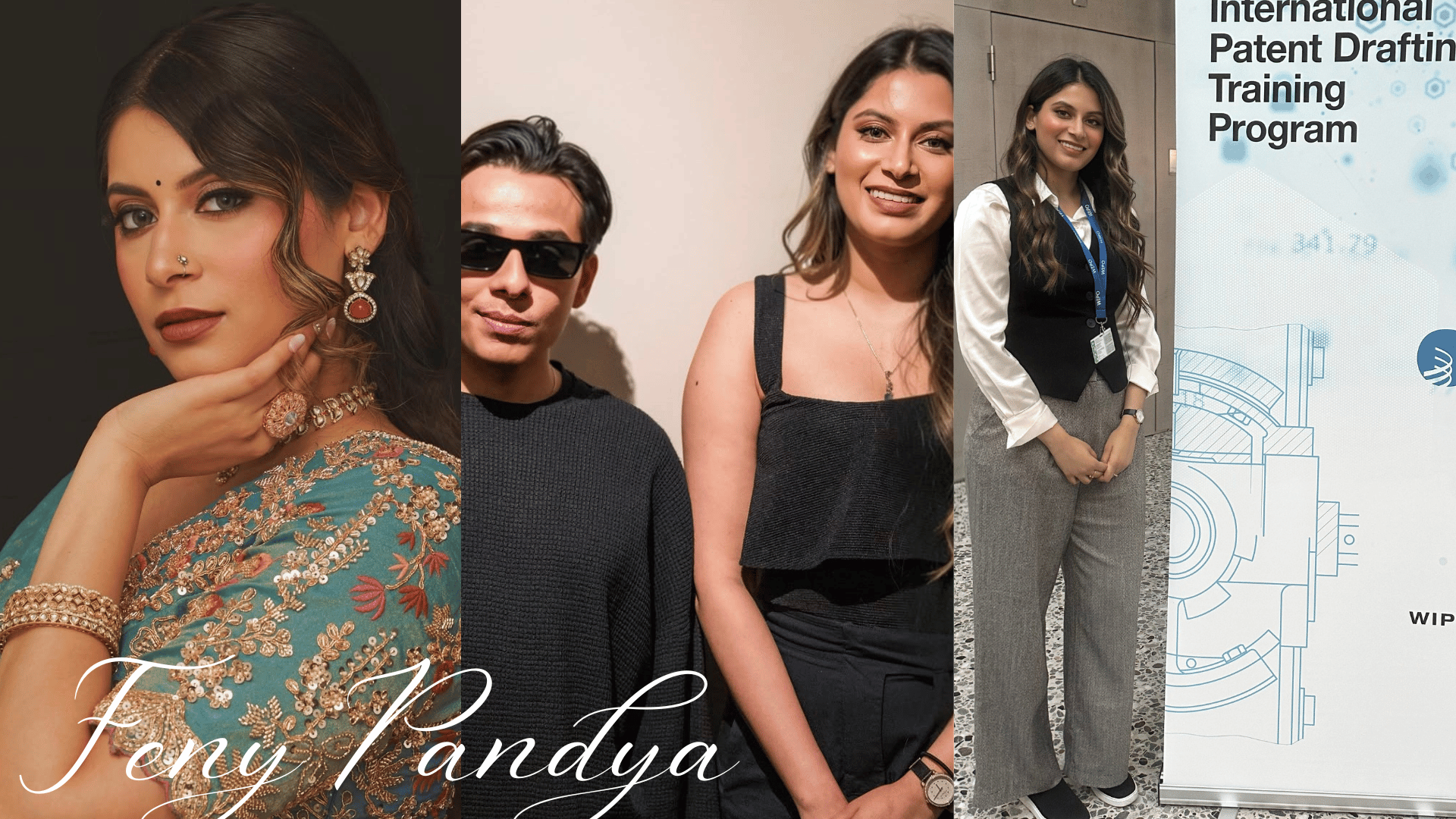
Pandya works in intellectual property as a patent technical specialist, drawing on a background in science and biomedical engineering. She is also a vocalist, a trained Bharatanatyam dancer, a student of Hindustani classical music, and someone who has explored modeling and acting. Raised in Canada and now based in the United States, she has spent much of her life moving between professional ambition, creative curiosity, and a strong connection to her South Asian heritage.
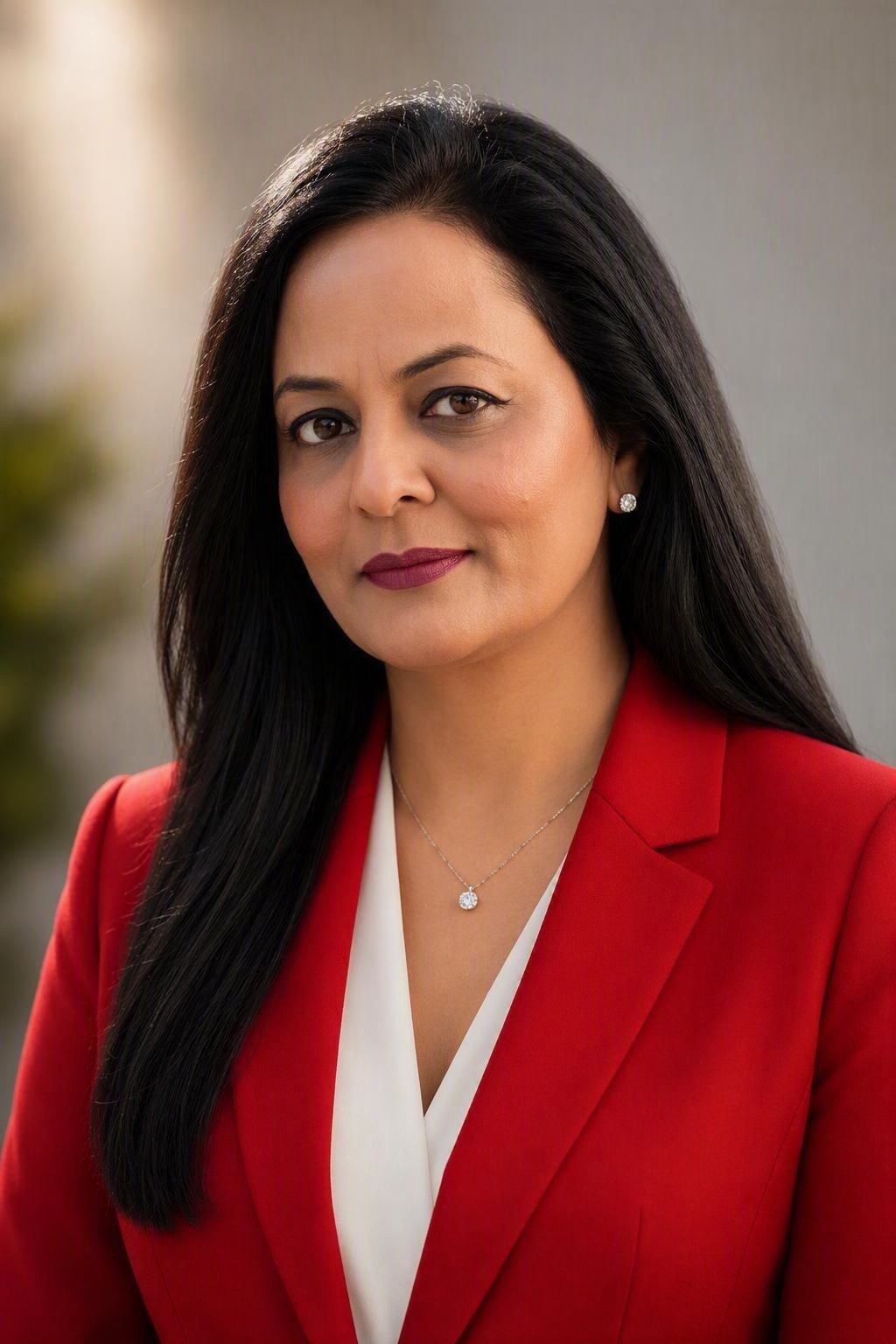
For this Sanskar Session, Dr. Bindu Ranaut turns the questions toward Pandya, one of Sanskar Savvy’s longtime community members and feature writers. Ranaut begins by looking beyond Pandya’s résumé and asking how she would describe herself if all of the titles disappeared.
Pandya’s answer is less about what she does and more about how she wants to live. “I don’t want to be defined by one thing for the rest of my life,” she said, explaining that she still has experiences she hasn’t had, subjects she hasn’t learned, and interests she may not have discovered yet. She describes herself as curious, creative, ambitious, and constantly evolving. “Stagnancy bores me,” she said.
For Sanskar Savvy, that willingness to keep evolving fits naturally within Celebrate, Explore, Connect! we celebrate the values and opportunities that helped shape us, explore what success can mean for a new generation, and connect through stories that show culture and identity do not have to remain fixed in order to remain important.
What If the Life You Planned No Longer Fits?
Growing up between cultures gave Pandya an early understanding of both opportunity and expectation. She was raised in Canada with a strong connection to her Indian heritage and remains deeply appreciative of the emphasis her family placed on education, hard work, and financial stability.
She also understands where those priorities came from. Her parents built a life in a new country while navigating a different language and environment, and Pandya has become more conscious of the sacrifices that made many of her own opportunities possible.
She has questioned the idea that gratitude requires following one exact blueprint.
“There is a difference between appreciating the values you were raised with and believing that you have to follow an exact blueprint for your life,” she told Ranaut.
For years, success could feel like a familiar sequence: do well in school, choose a respected profession, become financially secure, and reach certain milestones on schedule. Pandya still values education and independence, but she has become more willing to ask, “Who am I doing all of this for? Is it because it’s genuinely the life that I want? Or is it because it’s the life that I’ve been conditioned to believe that I should want?”
That question became especially important when she reconsidered medicine.
Pandya studied biology, psychology, and neuroscience as an undergraduate and spent years imagining a future in medicine. Science itself was never the problem. What changed was her understanding of the life the profession demands.
“One of the hardest things to admit to yourself is that something you’ve worked toward for years might not actually be what you want anymore,” she said.
Changing direction meant letting go of a version of herself she had spent years imagining, but Pandya no longer sees that decision as failure. “Just because you’ve invested a lot of time in something doesn’t mean you owe it the rest of your life,” she said.
That decision eventually led her to biomedical engineering, where a course introduced her to intellectual property, a field she hadn’t known existed. Today, she works at the intersection of science, technology, innovation, and law.
Her experience changed how she thinks about career planning. “You can make a very thoughtful decision at 20 and still discover at 25 something that completely changes your perspective,” Pandya said. “Changing your mind doesn’t have to mean that you made a mistake. Sometimes it simply means that you have more information about yourself than you did when you first made the plan.”
Can You Be Ambitious Without Becoming Only Your Career?
Pandya’s professional path changed, but she never wanted that to mean giving up the creative parts of her life.
When Ranaut asked whether she ever feels torn between her career and her artistic interests, Pandya answered immediately: “24-7, 365 days? Absolutely.” She has stopped accepting the idea that feeling torn means one side has to disappear.
Pandya enjoys the intellectual challenge of her professional work and values the independence it gives her. At the same time, she knows professional success alone wouldn’t be enough if it required abandoning music and performance.
“If I built a wonderful professional career and completely abandoned my creative inner child, I would not feel fulfilled,” she said. She finds the assumption that someone must be either a serious professional or a creative person unnecessarily limiting. “Why can’t you be both?”
That doesn’t mean she believes every part of life can get equal attention all the time. Some periods require more professional focus, while others allow more room for rehearsals, performances, or creative work. “Everything doesn’t have to receive equal attention at every moment,” she said.
Pandya has also challenged the idea that a creative pursuit only becomes legitimate if it turns into a career. “I don’t need singing to replace my career in order for it to matter to me,” she said.
That distinction matters in a culture where interests are often expected to become side hustles, professional opportunities, or something measurable. For Pandya, something can matter simply because it brings expression, discipline, joy, community, or connection.
She thinks about stability in much the same way. Financial independence remains important, but ideally it should create more freedom, not fewer choices. “I don’t want to work towards independence only to feel like I have fewer choices about how I spend my life,” she said.
Staying Connected to Culture Without Having to Prove It
Pandya’s creative interests are closely tied to her South Asian identity. She moved to Canada as a young child, but Indian culture remained part of daily life at home through Gujarati music, garba, Bollywood, Bharatanatyam, and the traditions her parents kept present.
Her interests later expanded into keyboard, Hindustani classical music, and even Sanskrit courses during university. Those experiences gave her ways to connect with storytelling, language, mythology, discipline, and artistic traditions passed through generations.
As she has gotten older, though, her understanding of cultural connection has become less about following a fixed model.
“I don’t think being connected to your roots means having to live exactly as previous generations did,” she said.
Pandya believes culture has always evolved, and each generation finds its own way to express and preserve it. As someone raised in Canada, her relationship with Indian culture will naturally look different from that of someone who grew up in India. She doesn’t see that difference as making her connection any less real.
“Being connected to my roots isn’t necessarily about proving how Indian I am,” she said.
For people raised in the diaspora, that distinction can be significant. Questions about being Indian enough, traditional enough, connected enough, or doing culture the “right” way can become part of growing up between places.
Pandya approaches it differently. She wants a genuine relationship with her heritage and the freedom to decide how she carries it forward.
Garba has become one especially visible expression of that connection. Performing in rooms full of people who may have grown up in different countries but immediately recognize something shared through the music has shown her how culture can create belonging beyond geography.
“I can respect where I came from while still deciding for myself where I want to go,” she said.
Learning to Be a Beginner Again
Music is one of the clearest places where Pandya’s cultural identity and creative ambition meet. She has spent years performing garba, Bollywood, and Indian music, but what keeps drawing her back is not simply being onstage. It is the exchange that happens with the people in front of her.
“There is this energy that you experience when you’re performing, and an entire crowd is singing, dancing, and responding to the music,” she said. “You’re not just singing to people, but you’re creating something with them.”
That feeling is part of what makes garba especially important to her. Performing for people who may have grown up in different countries but immediately recognize the music has shown her how culture can create connection without requiring everyone in the room to have had the same upbringing.
The actual work of becoming a singer, however, has been far less effortless than a performance can make it appear. Pandya talks openly about riyaaz, technique, repetition, self-criticism, and the frustration of hearing what she wants her voice to do before her body is ready to produce it.
“Being passionate about something doesn’t automatically mean that you’re going to be good at every aspect of it,” she said. “You still have to put in the work.”
That process has changed her relationship with music. When she was younger, being a good singer felt closely tied to performing well and earning appreciation. Now she is more interested in the private work of becoming better, including the parts no audience sees.
“You have to sit with your limitations,” she said, describing the patience required to keep practicing even when improvement isn’t immediately obvious.
That experience has also changed how Pandya thinks about confidence. “Self-confidence doesn’t mean that you don’t have self-doubt,” she explained. For her, confidence means recognizing where she still needs to improve without letting that awareness diminish her love for music.
Her experience with RhyDhunn, the Garba, Bollywood, and Indian music band she performs with, has given her another kind of growth. Rather than entering rehearsals simply to perform what has already been decided, Pandya said she has been encouraged to contribute ideas, question arrangements, experiment, and develop her own artistic instincts.
“You don’t have to make yourself smaller in order to belong,” she said.
Pandya credits that environment with making her more comfortable speaking up, offering ideas, and trusting that she does not need to have mastered everything before she has something worth contributing.
“The best mentors, they don’t necessarily make you into a version of themselves, but they help you become more comfortable with being yourself,” she said.
That willingness to remain a student has carried beyond music into acting, modeling, and other creative interests. Pandya no longer believes she needs to be exceptional at everything she tries for the experience to matter.
“I don’t actually need to be exceptional at everything I try for the experience to have been worthwhile,” she said.
Sometimes curiosity is enough. For Pandya, music has helped teach her that growth can come from performing for a room full of people, practicing alone when no one is listening, contributing an idea before she knows whether it will work, and staying with something long enough to hear herself improve.
How Do You Keep Growing Without Missing Your Actual Life?
Ranaut also asks Pandya about the part of ambition people do not see.
From the outside, a full life can look like one accomplishment after another: professional milestones, performances, travel, creative projects, and new opportunities. The preparation, missed plans, rejected opportunities, exhaustion, and disappointments are much easier to leave out.
Pandya knows social media can intensify that difference. People tend to share what went well, not necessarily the opportunity that fell through or the week when everything felt overwhelming. She is also learning not to measure her worth by how productive she is.
“The difficult thing about ambition is that the finish line has a tendency to keep moving,” she said.
An achievement can quickly become the beginning of the next goal, leaving little time to recognize what has already happened. “I don’t want to spend the rest of my life chasing the next thing and somehow miss the life that’s happening in between them,” she said.
Pandya has also become less interested in turning every disappointment into an inspirational lesson. “Setbacks don’t always have to become these great inspirational stories with a perfectly packaged lesson at the end,” she said. Sometimes something does not work out. Sometimes the response is simply disappointment.
Growth does not always look like another achievement either. It can mean setting a boundary, giving yourself time, changing direction, or walking away from something you once thought you needed.
When Ranaut asked what Pandya’s younger self would think of the person she has become, Pandya said she would probably be surprised that medicine was no longer the plan. She would also be excited by the stages, people, and experiences that became part of her life because she allowed herself to try something different.
“I’ve stopped seeing success as becoming one very specific version of myself,” she said.
Pandya still wants to learn, perform, explore, and grow, but she no longer wants happiness to depend on an achievement that hasn’t happened yet.
“I hope that 10 years from now, I’m still curious enough to surprise myself,” Pandya said, “because I think that would be a pretty wonderful life.”
Stay Connected With Sanskar Sessions
This conversation with Feny Pandya is part of Sanskar Sessions, our continuing series of interviews with the writers, artists, professionals, creators, and community voices whose experiences give us new ways to think about culture, identity, ambition, and the lives we are building. Dr. Bindu Ranaut’s questions move this conversation beyond what Pandya has accomplished and toward what she has learned along the way, giving two members of the Sanskar community room to talk about the parts of success that do not always fit into a résumé or social media post.
Celebrate, Explore, Connect! with us as we continue sharing the people, ideas, and stories shaping South Asian communities today.