Published:
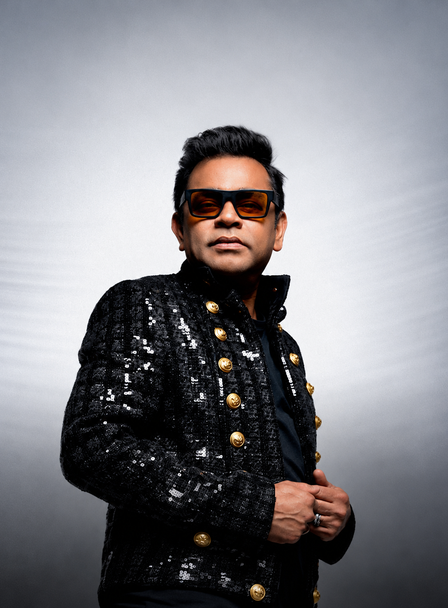
Anuv Jain Brings Memory and Meaning to The Town Hall in New York
By Feny Pandya
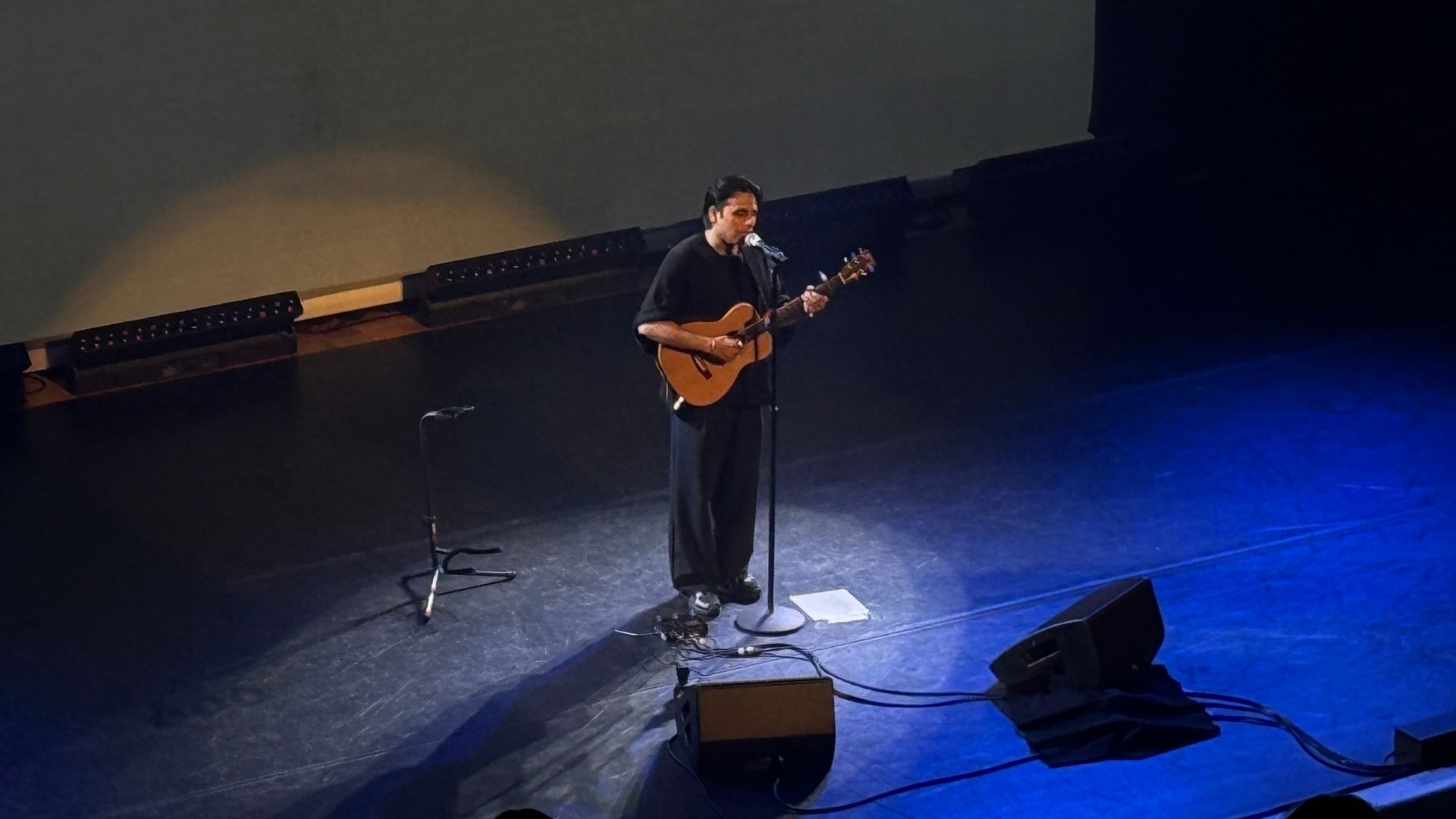
I went to Anuv Jain’s New York show expecting to hear songs I already knew. What surprised me was how much I found myself listening before the songs even started. As a vocalist, I usually notice the technical things first. Breath. Tone. Placement. Control. The way someone handles a difficult phrase or recovers after a softer note. That is normally where my ear goes without me even thinking about it.
But at Anuv Jain’s Dastakhat World Tour stop at The Town Hall, I kept paying attention to something else: the way he spoke. Not just what he said, but how he moved from a memory into a song, how he made the audience laugh before letting the room settle into something more emotional, how a small story from his life could make the next lyric feel more familiar before he even sang it. That was the part of the night that stayed with me.
Anuv Jain is often introduced as a singer-songwriter, and of course, that description fits. But after seeing him live, I found myself understanding him a little differently. To me, his strongest quality is not only in the songs themselves, but in the way he treats language. His work often feels like spoken word placed inside melody. It is built on memory, timing, restraint, and the kind of writing that does not try too hard to impress you.
At Sanskar Savvy, we Celebrate, Explore, Connect! by looking closely at artists who give our community new ways to understand culture, emotion, and identity. Anuv’s New York performance gave me a reason to celebrate the quiet power of lyrical storytelling, to explore the spoken-word quality in his music, and to connect with a room full of people who seemed to have brought their own memories into his songs.
The Story Started Before the Song
Some of the most revealing moments of the night happened before the first lyric. Anuv introduced his songs through memories, personal reflections, and small scenes from his life. These were not long speeches, and they did not feel like filler between songs. They felt connected to the writing itself.
That stood out to me because many artists talk between songs, but not everyone uses that space intentionally. Sometimes stage banter feels separate from the performance. With Anuv, the introductions felt like part of the show’s emotional architecture. He would give the audience just enough context to enter the song differently, but not so much that the song lost its mystery.
That restraint was important. He did not over-explain the songs. He offered a memory, a joke, or a small emotional clue, and then let the lyric take over. As someone who performs, I know how easy it is to either say too much or say something generic just to fill the space. Anuv seemed comfortable letting the in-between moments breathe.
His humour also made the emotional parts land more naturally. He did not lead the room straight into sadness or nostalgia. He softened the space first. He made people laugh. He allowed the audience to relax. Then, when the song began, the feeling had somewhere to go.
That felt very true to how people actually process emotion. We rarely enter our deepest feelings directly. We joke. We deflect. We tell the story around the feeling before admitting what it really meant. Anuv seemed to understand that rhythm.
Listening to the Words First
What I kept coming back to during the show was how much of Anuv’s work depends on language that feels simple, but not careless.
His lyrics are not trying to be ornate. They often sound like thoughts someone finally found the courage to say plainly. That kind of simplicity can be easy to underestimate, especially in a live entertainment space where bigger often feels better. Bigger arrangements. Bigger vocals. Bigger production. Bigger emotional gestures.
But Anuv’s writing works because it does not force emotion beyond its natural size. He lets longing stay quiet. He lets affection feel uncertain. He lets memory remain a little unfinished. I think that is why his songs feel personal to so many people. They do not close the feeling too tightly. They leave room for the listener.
During the show, I noticed how often the audience seemed to respond not just to the melody, but to the recognition inside the words. A lyric would begin, and the room already knew where it was going. It was clear that his fans in the room didn’t just know the words; they were singing along because these lyrics had lived with them for a long time before this one night.
In captions. In car rides. In breakups. In long-distance phases. In quiet crushes. In those moments, sending a song feels easier than saying the thing directly. That is where Anuv’s writing seems to have found its place.
When a Seated Show Did Not Stay Seated
At one point, Anuv mentioned that New York was his first seated show. That detail made the audience’s response even more interesting to watch.
The venue had the structure of a seated concert, but the audience did not always follow that structure. People kept getting up. They sang the lyrics out loud. They reacted physically to songs that, on paper, might seem too intimate for that kind of response.
It did not feel disruptive. It felt like recognition. That was one of the most memorable parts of the night for me. The songs may be quiet and reflective, but the audience’s relationship with them was not passive. People had clearly carried these lyrics into their own lives before bringing them back into the room.
I also think that matters in a South Asian context. So many of us live between languages, cities, families, and versions of ourselves. Some emotions are hard to translate neatly. Some experiences do not fit into one cultural vocabulary. A song can become useful in that space because it says something close enough to what we feel, without demanding that we explain everything.
Anuv’s writing seems to understand that. It allows emotion to remain a little unresolved, which is often what makes it feel honest. At The Town Hall, those private attachments became public for a few hours. People stood up not because the show demanded it, but because the words had already done their work.
The Discipline of Saying Less
What I appreciated most about Anuv Jain’s performance was his trust in restraint. He did not need to overwhelm the room to hold it. He did not rely on grand declarations or dramatic explanations. Instead, he trusted smaller things: a remembered detail, a pause, a sentence that did not say everything, a lyric that left space for someone else’s story.
As a performer, I found that especially interesting. There is a real discipline in choosing not to overstate. It takes confidence to let a line remain simple. It takes control to let a moment feel intimate without trying to make it grand.
In South Asian entertainment spaces, we know how to celebrate scale. Big voices. Big productions. Big entrances. Big emotional peaks. There is beauty in that. But Anuv’s New York show reminded me that there is also power in precision.
Sometimes the most affecting moment is not the biggest one. Sometimes it is the sentence before the song, the memory that makes the lyric land differently, and the pause that gives the audience a second to find themselves inside the feeling. That was the strength of the evening for me.
Anuv may be introduced as a singer-songwriter, but his impact begins before the song fully starts. It begins in the setup. In the way he speaks. In the way he lets memory lead. In the choice to say less and allow the audience to feel more.
At Sanskar Savvy, we Celebrate, Explore, Connect! by honouring artists who help us understand culture through the words, memories, and moments people carry with them. Anuv Jain’s New York performance gave us a reason to celebrate lyrical restraint, explore the spoken-word artist within his work, and connect with a room full of people who rose to their feet because his words had reached them first.
Stay Connected with Sanskar Savvy
Stay connected with Sanskar Savvy for exclusive coverage of the latest tours and for more stories on the South Asian community. For more on upcoming events, check out our event page. Additionally, check out our latest articles to stay up to date on movies, announcements, and South Asian achievements throughout North America.
Want to work with us? See how you can partner with us!
Want early access and special updates? Join our Sanskar Community to stay informed about presales, giveaways, and major tour announcements.Celebrate their music, Explore their legacy, and Connect with fans throughout North America.
Follow us on Instagram, Facebook, and YouTube to keep the celebration going. Have an artist or tour you want us to cover next? Drop us a tip, we’re always listening.