Published:
Sabina Khan-Ibarra on the Stories We Inherit and Choose to Carry Forward
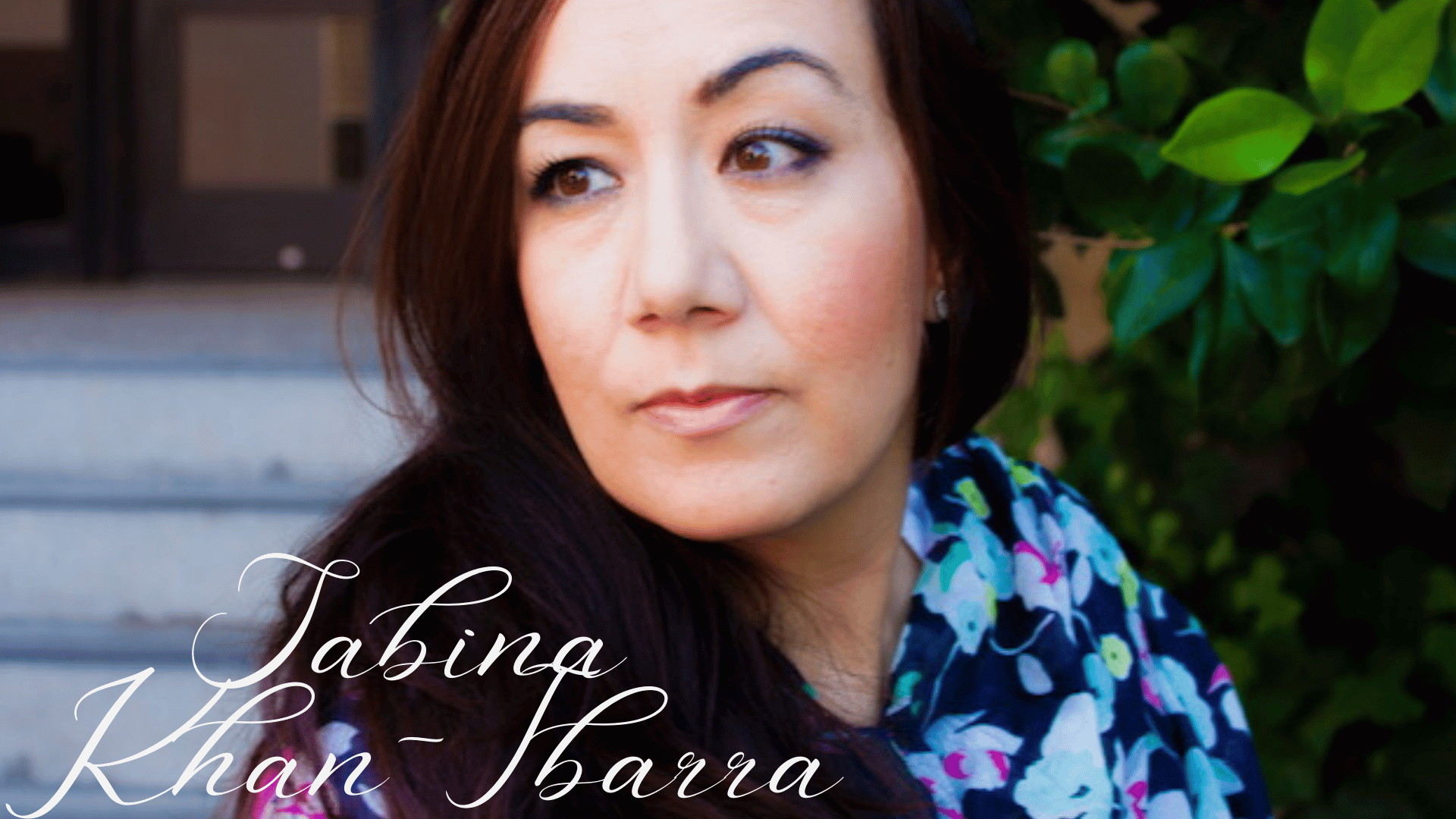
Sabina Khan-Ibarra calls herself a story collector, and the description becomes clearer when she explains how closely she listens. She keeps notebooks, records things her children say, remembers conversations, and returns to family histories that may have waited years before someone was ready to tell them. One entry came when her son was still very young. “Mama, I love you so much, you’re like a red heart walking,” he told her. Khan-Ibarra wrote it down, preserving a moment that might otherwise have disappeared into an ordinary day.
Her father collected stories in his own way. An engineer by profession, he carried family and community history with him and shared stories about his childhood and earlier generations. Since his death last year, Khan-Ibarra has returned to many of those memories in writing shaped by her Pakistani Pashtun Muslim American experience and by questions of family, migration, faith, inheritance, and belonging. She holds an MFA in Creative Writing from San Francisco State University, where she graduated with Distinguished Honors.
As part of Sanskar Savvy’s continuing SALA 2026 coverage, Dr. Bindu Ranaut spoke with Khan-Ibarra about what families preserve, what they leave unsaid, and how stories change as they move between generations, languages, and countries. This conversation closely reflects Celebrate, Explore, Connect! through the histories we preserve, the parts of inheritance we question, and the stories that continue connecting South Asian communities throughout generations.
The Stories We Hear and the Stories We Inherit
Khan-Ibarra began calling herself a story collector during the COVID-19 pandemic. With young children at home and little uninterrupted time to write, she decided that listening and collecting could also be part of the work. Stories appeared in what her children said, memories her father shared, everyday conversations, and thoughts that came while she did the dishes.
That habit connects directly to her poetry manuscript, “What My Mouth Inherited.” The manuscript, previously titled “a new vocabulary,” has twice been named a semifinalist for the University of Wisconsin Press’s Brittingham and Felix Pollak Poetry Prizes and was a 2024 semifinalist for the Philip Levine Prize for Poetry. Ranaut chose the title because it suggests an inheritance that cannot be boxed or passed from one person’s hand to another. For Khan-Ibarra, the inheritance of the mouth includes words, expressions, silences, family rules, and the things people learn not to say.
She began noticing that some of the phrases she used came directly from her mother, who had inherited them from her own mother. Other inheritances lived in what the women in her family avoided discussing. Khan-Ibarra remembered women who left marriages and returned home, even though younger relatives rarely explained their circumstances. She also remembered how her mother avoided saying the word cancer when Khan-Ibarra’s father was ill, calling it “the bad thing” instead. Saying the word seemed to give the illness more presence. Khan-Ibarra’s relationship with that language changed because she accompanied her father to appointments and spoke with his doctors, allowing her to use the clinical term while still understanding why her mother found it painful.
Language also changes as it crosses generations and countries. Khan-Ibarra speaks Pashto with her parents, and English with her children, and her father used to laugh at the hybrid language that sometimes emerged, calling it “Pushto-English.” Her children receive a version of that inheritance shaped by their mother’s experiences in Pakistan and the United States. Khan-Ibarra also recognizes home in both places. She described seeing the Himalayas when she arrived in Pakistan and feeling a homecoming, while the Golden Gate Bridge can give her that same sense when she returns to California.
Writing Into Family Silence
Ranaut returned several times to stories families don’t initially tell. While discussing Khan-Ibarra’s “The Stories She Was Never Told,” she asked whether writing can help recover something from those absences. Khan-Ibarra explained that she often writes into “the silences and the gaps” of family history.
She grew up without knowing that her father had been married before he met her mother. His first wife died when they were both only 19, and Khan-Ibarra learned about the marriage from a relative when she was around 12 or 13. When she returned home and asked about it, her parents told her the story. Suddenly, another detail made sense. Her mother hadn’t worn red at her wedding because she wasn’t her husband’s first bride. Instead, she had worn a more muted color. Khan-Ibarra had seen what her mother wore, but she didn’t know the story behind that choice.
Another family silence opened much later. After Khan-Ibarra lost an infant son, her mother told her that she had experienced a late-term stillbirth herself. Khan-Ibarra had never known. Those experiences changed the way she thinks about when family stories become tellable. Parents may share more as their children grow older, and a shared experience can sometimes put language to something that stayed private for years.
Khan-Ibarra also finds history inside objects. She told Ranaut about a scarf called a chale that she wore while visiting Pakistan. The olive-green fabric with red dots didn’t appeal to her when she was younger, and she couldn’t understand why relatives insisted she wear that style. Her father later explained that the red represented bloodshed by people who resisted British rule. The explanation led to more family history, including stories about Khan-Ibarra’s grandfather, who fought the British and later fled to Kabul while authorities were searching for him.
A scarf she once resisted wearing became connected to people and histories she didn’t know existed. Khan-Ibarra’s writing often begins in that space: something familiar that changes once you know the story behind it.
Choosing What We Pass Forward
Inheritance in Khan-Ibarra’s work does not require preserving everything unchanged. Ranaut raises this question in Khan-Ibarra’s essay “What I Will Tell My Daughter,” asking what she wants the next generation to receive and what she hopes will end with hers.
Khan-Ibarra sees considerable beauty in what she inherited, including Pashto words that don’t translate perfectly into English, family memories, stories from her elders, and physical objects such as a shawl she hopes to give her daughter one day.
She also sees cultural expectations worth scrutinizing.As a girl visiting Pakistan, Khan-Ibarra remembers sitting and writing when a relative told her mother in Pashto, “This girl is going to be trouble.” She could not understand why reading and writing made her troublesome. Her mother rejected that judgment and kept believing in her. Khan-Ibarra now carries that experience into how she raises her own daughter, teaching her that a trait someone else labels difficult may be part of what gives her confidence, independence, or purpose.
The same willingness to question inheritance appears in Khan-Ibarra’s discussion of ghairat, a Pashto concept associated with honor. She explained that ideas about honor can restrict women, while her own experience offered another interpretation. As she understands it, honor can mean respecting a woman’s independence, supporting her ambitions, and standing behind her without claiming authority over her choices.
She credits her father and brothers with showing her that kind of support. Khan-Ibarra wants her daughter to understand both the beauty and the difficult parts of what she has inherited, make conscious choices about what she carries forward, and eventually do the same for the generation that follows.
“Take the good from that, and move forward,” she said.
Faith, Imagination and the Work of Telling a Story
Khan-Ibarra’s writing also examines the places where faith, motherhood, and safety meet. Her poem “How to Pray at the Mosque” was shaped in part by the 2019 Christchurch mosque shootings in New Zealand, which took place when her children were still young and regularly accompanied her to the mosque.
The attack changed what she could think about during prayer. Khan-Ibarra described trying to focus on worship while also considering what she would do if someone entered the mosque with a gun. She thought about what she would tell her children, where they might hide, and how they should respond if they heard certain sounds. The practical instructions began to sit beside the words of prayer. Khan-Ibarra connected that fear to violence that has reached churches, synagogues, gurdwaras, and other sacred spaces, reflecting on what it means to seek spiritual connection while remaining aware of vulnerability.
Writing gives her different ways to approach experiences that can be difficult to address directly. Her novel in progress, “A Poppy Flower,” follows three Pashtun Muslim women as they navigate grief, family, and stories that survive migration. The project originally began as nonfiction, but Khan-Ibarra found that fiction gave her enough distance to approach material close to her own life more freely. It also allows her to imagine the lives of women whose histories she knows only in fragments. She can build characters inspired by grandmothers and earlier generations without presenting imagination as family record, while dreams, magical realism, and nonlinear time give her additional ways to explore memory.
Her commitment to listening extends to other writers. Khan-Ibarra teaches through the Litquake Elder Project and directs Rooted & Written, a literary reading series celebrating writers of color and the communities they carry. During a recent session built around food and memory, older writers began sharing stories about mothers, bakeries, berries, bread, cooking, and family routines. The details differed, but the emotions often overlapped.
“We’re more alike than we are different,” Khan-Ibarra told Ranaut.
Global Gaze, South Asian Soul
The 2026 SALA theme, “Global Gaze, South Asian Soul,” closely matches the territory Khan-Ibarra explores in her work. She writes as a Pakistani Pashtun Muslim American whose stories move across countries, generations, languages, histories, and literary forms while staying closely connected to the family and community that shaped her.
When Ranaut asked what she hoped audiences would carry away after encountering her work at SALA, Khan-Ibarra returned to connection and the importance of resisting assumptions. Pashtuns are a distinct community within Pakistan and Afghanistan, and she wants readers to approach that community with greater nuance and curiosity. She wants people to encounter Pashtun women, families, writers, and professionals through their individual stories rather than through a narrow set of assumptions.
Her own father challenged some of those assumptions throughout her life. When Khan-Ibarra wrote about Muslim women and Pashtun feminism, he supported her work and encouraged others to read it. Near the end of his life, he continued urging her to write.
“Keep writing, don’t stop telling stories,” he told her.
Those words connect the father, who carried family history, with the daughter, who now calls herself a story collector. Khan-Ibarra preserves what might disappear, asks questions about what was left unsaid, and challenges parts of an inheritance while maintaining a deep connection to where it came from. Her work gives the Sanskar Savvy community another way to Celebrate, Explore, Connect! as we celebrate a Pashtun voice within the wider South Asian story, explore the histories families carry across generations, and connect through memories that can make very different lives feel familiar.
Some family stories arrive through words. Others wait inside photographs, objects, habits, or questions that take years to ask. Khan-Ibarra’s work begins by paying attention to all of them and considering what each generation will do with the stories it receives.
Continue exploring the writers, artists, and cultural voices featured in Sanskar Savvy’s SALA 2026 coverage, and stay connected for more Sanskar Sessions with the people sharing their stories with our community.