Published:
India’s Student Uprising and the Artists Standing With the Cockroach Janta Party
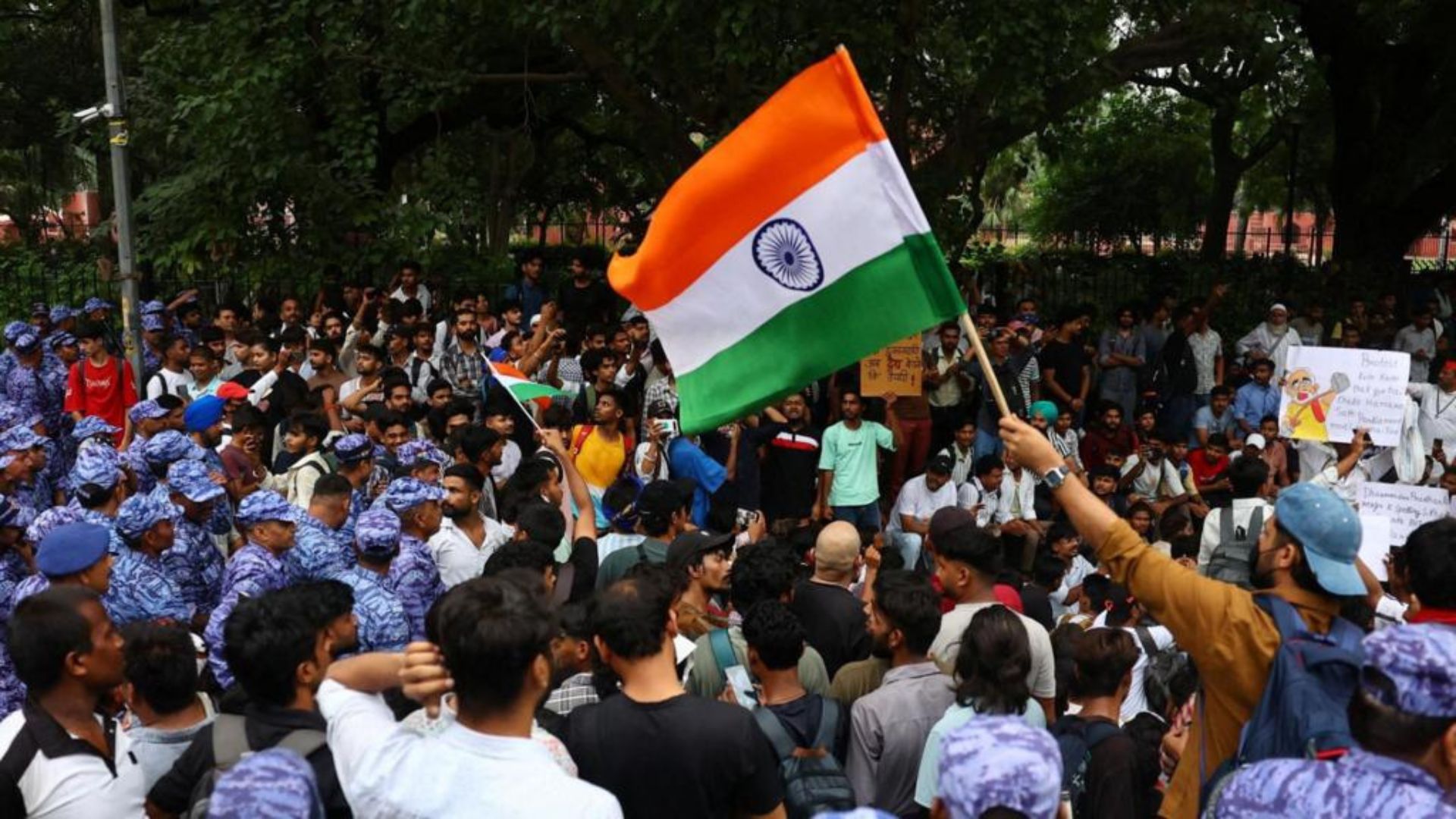
Since June 6, New Delhi’s Jantar Mantar has become the center of one of India’s largest youth-led movements in years.
The Cockroach Janta Party, or CJP, is a satirical youth political movement founded by Abhijeet Dipke. Alongside student organizations, CJP is demanding the resignation of Union Education Minister Dharmendra Pradhan over alleged irregularities involving the 2026 NEET examination and concerns surrounding CBSE’s On-Screen Marking system.
The protesters are also calling for greater transparency, major reforms to India’s public examination process, and compensation for families affected by student deaths linked to the examination crisis.
What started with a protest in the form of satire has grown into a national conversation about education, unemployment, police conduct, and whether India’s political leaders are listening to its young people. It has also drawn musicians, actors, filmmakers, and other artists into the movement.
For Sanskar Savvy, Celebrate, Explore, Connect! also means paying attention when culture meets public life. These artists are not appearing on a stage. They are using the trust they have built with their audiences to help students feel seen and heard.
How the Cockroach Janta Party Grew
The movement’s name came from a controversial remark by Chief Justice of India Surya Kant, who reportedly used the word “cockroaches” while discussing unemployed young people and social media activists. Dipke and his supporters reclaimed the insult. Their message was simple. They were not disappearing, and they were not done demanding answers.
CJP soon moved beyond memes and social media posts. It began organizing demonstrations alongside groups including the Students’ Federation of India, the All India Students’ Association, and the All India Students’ Federation.
The movement also found a large audience online, building a following of more than 20 million people on Instagram. That reach gave CJP a direct connection to the students and young professionals who felt ignored by traditional political institutions.
The anger goes beyond one examination. Repeated paper leaks, marking controversies, limited employment opportunities, academic pressure, and distrust in public institutions have all contributed to the movement. The reported loss of students has become one of CJP’s most urgent concerns.
In a June open letter to Prime Minister Narendra Modi, Dipke said 11 NEET aspirants had died by suicide within one week, including five within 48 hours. By July 20, broader reporting linked the examination crisis to more than 20 student suicides.
For the students of India, however, these are not simply statistics. Each number represents a student and a family living with the consequences of an examination system they believe has failed them. CJP has demanded compensation for the affected families, Pradhan’s resignation, and major changes to how national examinations are managed.
The March That Changed the Movement
The movement reached a turning point on July 20, the opening day of Parliament’s Monsoon Session. Thousands of demonstrators joined CJP’s “Chalo Sansad” march toward Parliament. Delhi Police had denied permission for the march and placed extensive restrictions around central Delhi. Officers erected barricades, closed some Metro stations, and increased security throughout the area. The demonstrators moved forward anyway.
Police responded with tear gas and batons. Videos showed officers striking and dragging protesters. Young demonstrators could be seen crying, pleading with police not to hit them, and trying to protect one another. Images from the streets showed blood, broken glass, damaged barricades, and clouds of tear gas.
Delhi Police said nearly 180 people were injured, including approximately 60 protesters and 118 security personnel. Authorities accused some demonstrators of throwing stones, attacking officers, and damaging public property. Police later filed criminal cases connected to violence and vandalism during the march.
Those allegations are part of the story. So is what the public saw in the footage. Students who gathered to demand accountability over their education system were met with batons, tear gas, arrests, and a heavy security presence. The imbalance of power was difficult to ignore.
The police response quickly became a rallying point in its own right. It drew condemnation from opposition leaders, human rights advocates, artists, and people who had not previously followed the movement. The crackdown did not end the protest. It gave the students a larger audience.
Sonam Wangchuk as the Movement’s Moral Center
If Dipke is the movement’s organizer, Sonam Wangchuk has become its moral center. The Ladakhi engineer, educator, climate activist, and Ramon Magsaysay Award winner has spent years using nonviolent protest to advocate for environmental protections, constitutional safeguards, and political representation in Ladakh. That history gave his support for the students added weight.
Wangchuk began an indefinite hunger strike in late June in solidarity with the movement and its demands for education reform. Members of several student groups joined him as protesters continued camping at Jantar Mantar.
His health soon became a national concern. Reports said Wangchuk lost approximately 8.5 kilograms, or nearly 19 pounds, during the fast. After about 20 days without food, police removed him from the protest site and transferred him to Safdarjung Hospital. Authorities said they acted on medical advice and following directions from the Delhi High Court. CJP organizers and Wangchuk’s family objected to the manner of his removal, describing it as forced.
For supporters, Wangchuk’s deteriorating health showed how serious the movement had become. His involvement helped turn a youth campaign into a cause that drew hospital updates, national political attention, and growing concern throughout India.
When Artists Show Up
Art can shape how that movement is understood and remembered. As the students gathered in Delhi, artists began joining them. Some appeared at Jantar Mantar or participated in the march. Others used social media to condemn the police response and amplify the protesters’ demands.
Their involvement did not resolve the crisis. It helped millions of people recognize that there was one.
Hanumankind: The rapper behind “Big Dawgs” joined the “Chalo Sansad” march in New Delhi. Videos showed him walking alongside students and activists while wearing an Indian cricket jersey and a face covering. He later shared footage and criticized the police use of tear gas and batons.
His decision to participate carried a different weight as he continuously supported the cause through social media and eventually through physical participation in the protest. He stood beside the students as the confrontation unfolded.
Shabana Azmi and Prakash Raj: Both actors joined protesters at Jantar Mantar and publicly supported their demands. Azmi spoke with demonstrators and participated in the march, while Raj later criticized the treatment of Wangchuk and the protesters.
Chaar Diwaari, Anuv Jain, and Encore ABJ: The independent musicians were among the artists identified in connection with the demonstrations. Their involvement brought the movement into the same independent music and hip-hop communities that include many of the young people driving the protests.
Bloodywood’s Karan Katiyar and Raoul Kerr: The musicians were also present in support of the movement. Their participation fit naturally with Bloodywood’s history of addressing social issues through its music.
Raftaar: The rapper was seen at the protest helping manage the crowd and guide demonstrators as the gathering grew. Rather than simply making a public statement, he appeared to take an active role on the ground, helping maintain order while standing with the students.
Other artists spoke from their platforms.
Vishal Dadlani posted an emotional video after Wangchuk was removed from Jantar Mantar. He condemned the treatment of the activist and questioned what was happening to peaceful protesters.
Urfi Javed criticized the police action and described the brutality shown in the footage as heartbreaking.
Yo Yo Honey Singh postponed the teaser for “Moonlight” as images from the march spread online, saying it did not feel appropriate to promote the release at that moment.
Huma Qureshi said the images of peaceful protesters being met with force would stay with her for a long time.
Nandita Das expressed solidarity with the protesters and said democracy becomes stronger when people are free to gather, speak, listen, and be heard.
Vir Das, Riteish Deshmukh, and Sonakshi Sinha also publicly supported the students through social media.
Reble, Rishab Sharma, and Lisa Mishra were among the independent artists who expressed solidarity with the movement.
These are just a few of the many important names that spoke out in this movement. Each response brought the story into a different community throughout both North and South India. Film audiences, hip-hop listeners, independent music fans, young women, comedy audiences, and people who may never have searched for a report about examination policy.
Diljit Dosanjh’s More Complicated Response
When first asked about the demonstrations, Diljit Dosanjh distanced himself from the issue and said he was an artist, not a politician. After footage of the July 20 police action spread, he issued a stronger statement supporting the students, saying they should not have been treated that way and acknowledging that he could once again be labeled anti-national after previously backing the farmers’ protest.
Many supporters of the protest compared his response to artists such as Hanumankind, who joined protesters in person and spoke out at the beginning of the fight. To some, Dosanjh’s statement felt shaped by public pressure, though it also reflected the risks artists face when speaking politically.
The Stars Who Stayed Silent
The protests also led to questions about the silence of several of India’s biggest film stars. Social media users asked why figures including Shah Rukh Khan, Aamir Khan, Ranbir Kapoor, Alia Bhatt, Deepika Padukone, Akshay Kumar, and Ajay Devgn had not publicly commented as footage of injured students circulated online.
Although people do not expect every artist to act as a political spokesperson, they do notice who speaks when the same young audiences supporting their movies, music, and careers are asking to be heard.
Why Artist Support Matters
Artists bring more than visibility to a cause. They bring their audiences. Hanumankind’s footage placed followers in the streets of Delhi. Vishal Dadlani’s response gave people an emotional view of Wangchuk’s removal. Honey Singh’s decision to delay a release acknowledged that continuing with normal promotion felt wrong while young people were being injured and mistreated. These reactions reached people who may not regularly follow Parliament, examination policy, or political news.
The responses that traveled furthest were not formal press statements. They were the moments that felt human. An artist walking beside protesters. An angry video recorded without a script. A promotional campaign paused to acknowledge more important issues. Those choices become part of how a movement is remembered.
Where the Movement Stands
CJP representatives met BJP president and Union Minister J.P. Nadda and presented their demands. Government representatives described the discussion as cordial, but the meeting did not produce an immediate resolution.
Protesters remained at Jantar Mantar and continued calling for Pradhan’s resignation, compensation for affected families, and changes to the examination system. Opposition leaders also increased their involvement. Rahul Gandhi and other members of the opposition staged a protest in support of the students, while political figures including Sharad Pawar and Supriya Sule visited or publicly backed the movement. The situation remains active. Government talks, legal action, Wangchuk’s health, and artist responses could all change quickly.
The Cockroach Janta Party has connected examination failures to a wider frustration over unemployment, accountability, and the treatment of young people demanding answers. The police response made that frustration harder for the public, political leaders, and the entertainment industry to ignore.
Years from now, people may not remember every political meeting or policy statement. They may remember students standing behind barricades, Wangchuk continuing his hunger strike, artists marching alongside students, and people with platforms asking why young people demanding accountability were met with force.
That is often how culture holds onto history.
At Sanskar Savvy, we Celebrate the artists willing to engage with their communities, Explore the forces shaping South Asian culture, and Connect our readers with the stories influencing a new generation.
Want the latest news in music and entertainment?
Sign up to Celebrate the artists moving the culture forward, Explore the ideas shaping its future, and Connect with a global community that cares about where the culture is going.
Want to work with us? See how you can partner with us!
Want early access and special updates? Join our Sanskar Community to stay informed about the latest news, contests, and major tour announcements. Celebrate these stories, Explore legacies, and Connect with our community throughout North America.
Follow us on Instagram, Facebook, and YouTube to keep the celebration going.