Published:
How Anoushka Dugar Is Exploring South Asian Identity Through Art
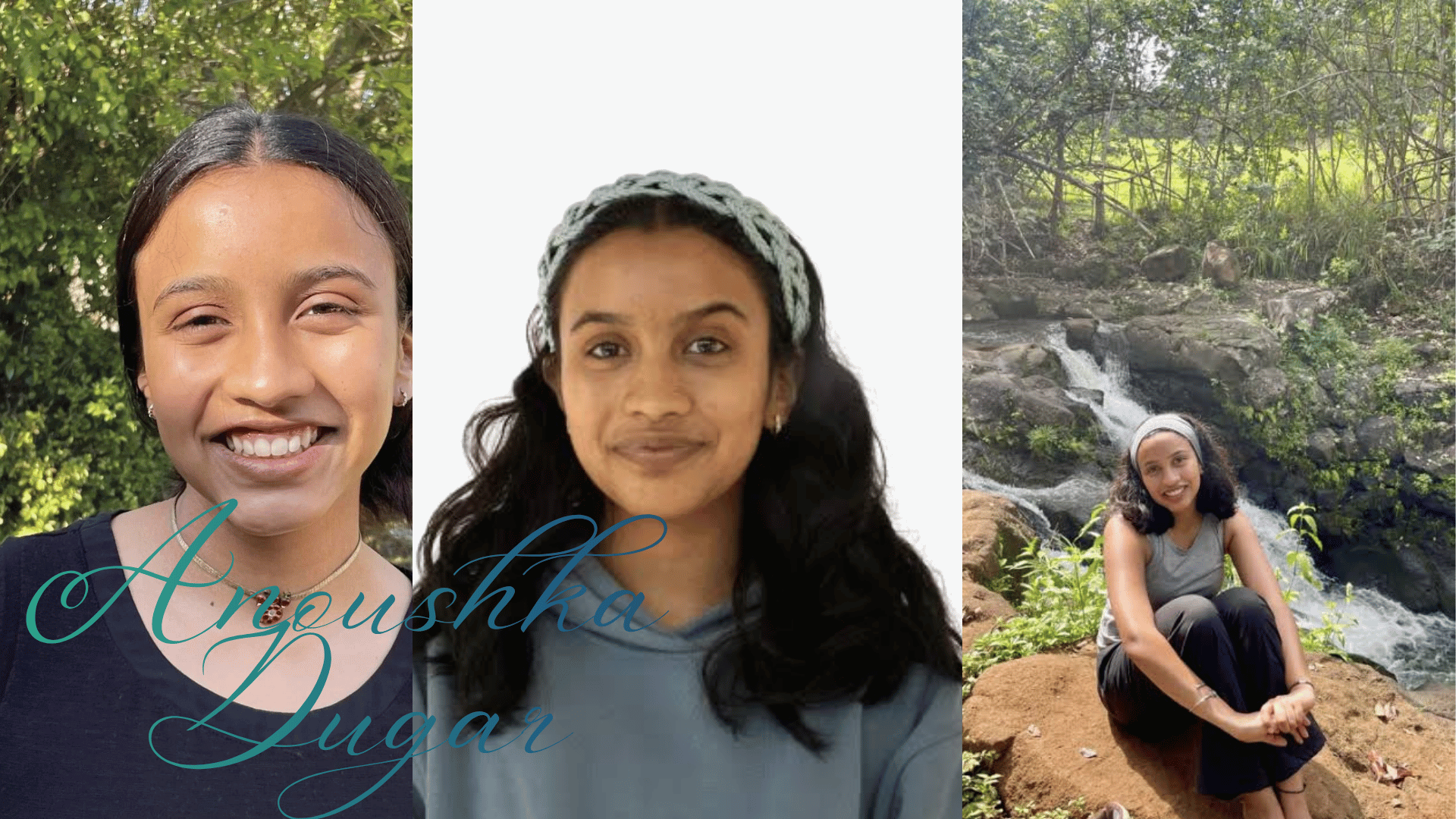
Anoushka Dugar is still figuring out what being South Asian American means to her, and she’s exploring it through art. Poetry, Indian classical dance, journalism, photography, design, audio, and music have each given the Bay Area student a different way to examine the culture she inherited and decide what she wants to make of it.
At the time of the interview, Dugar was a high school design student who also wrote poetry, worked in student journalism, and experimented with multimedia storytelling. She has served as a Vice Youth Poet Laureate with the Santa Clara County Youth Poet Laureate Program, and her poetry has received recognition from the Scholastic Art & Writing Awards. Her creative interests have also taken her to the TEDx stage, where she spoke at TEDx Mountain View High School in 2026.
As part of Sanskar Savvy’s continuing SALA 2026 coverage, Dr. Bindu Ranaut spoke with Dugar about how young people build their own relationship with culture, what art can teach them about themselves, and why sharing South Asian traditions with others has become part of how she understands them.
Her perspective brings a younger voice to Celebrate, Explore, Connect! in Dugar’s experience, culture may begin with what family gives us, but understanding it requires our own curiosity.
Finding Culture Through Curiosity
One of Dugar’s largest school projects began with a subject she wanted to understand better.
For “Mother Cow,” created through her school’s digital arts program, Dugar researched the Sri Krishna Balaram Goshala in Milpitas, California. She knew she wanted to work on something connected to South Asian culture, but she didn’t start with a fixed argument about what the project should say.
Her interest came partly through family. Dugar grew up around Indian art, fashion, jewelry, and dance, especially through her mother and grandmothers. Her mother had also become interested in goshalas through community service, animal welfare, and their spiritual significance.
In Milpitas, Dugar noticed a traditional practice continuing in Silicon Valley. She watched volunteers care for the cows and began asking why people returned and what they found there.
The interviews changed how she understood the project.
“As a student journalist, I’m very familiar with the fact that oftentimes your angle of the story completely changes after the interview,” Dugar said.
Staff members helped her understand the goshala’s religious significance. Volunteers introduced another part of the story, talking about stress, life’s difficulties, and the comfort they found in caring for animals and spending time with others.
Dugar began paying greater attention to wellness and community service. She was no longer interested in why an older practice had survived. She wanted to understand what purpose it served for people living in the Bay Area now.
That curiosity shapes how Dugar approaches heritage. She does not assume that being South Asian means she already knows her family’s traditions. She is willing to research them, ask questions, and let other people complicate what she thought she understood.
Growing Up Between Two Worlds
When Ranaut asked how young people can preserve cultural traditions while developing their own creative identities, Dugar did not offer a set of rules.
“Finding your relationship with culture is such a personal thing,” she said. “I’m still trying to figure out how to do it.”
She first encountered culture largely through family. Indian textiles, jewelry, fashion, art, dance, and the influence of her mother and grandmothers shaped the world she grew up in. Later, she began choosing which subjects she wanted to investigate herself.
For one project, she drew inspiration from Gond art and its relationship with nature. “Mother Cow” led her toward another part of South Asian tradition, while Indian classical dance gave her another way to connect with culture through movement and performance.
The process has also brought her face-to-face with a feeling many young people in diaspora communities know well.
“I feel the need to water down my identity as a South Asian, as a person of color in the U.S.,” she told Ranaut. “When I’m in India, I feel like I’m too American.”
Rather than choosing one side, Dugar has begun giving herself more room to belong to both.
“Giving yourself that grace and realizing that you’re part of these two very different worlds, but they make you who you are,” she said.
That is also what she hopes other young people can take from her experience. There isn’t a single correct way to be South Asian, American, Indian American, or part of any diaspora community. The relationship can continue changing as a person learns more about family, culture, and themselves.
Dugar does not present her identity as something she has finished defining. She is learning what matters to her as she lives it, which may be more useful to young readers than pretending cultural identity arrives fully formed.
Following an Idea Into Different Forms
Dugar’s curiosity also explains why her creative work moves between writing, photography, audio, design, and music.
Her short story “The Night Shift Cleaner” follows Anya, a museum custodian faced with a moral choice after discovering something valuable during a shift. Dugar was drawn to museums because of her interest in history and knowledge, but she also wanted to create a quieter character others underestimate.
She initially assumed Anya would make the expected moral choice. Then she reconsidered.
“I initially was like, oh, she’s gonna do the right thing. That’s what everyone does,” Dugar recalled. “I thought, no, let me complicate this more.”
She later turned the story into an audio production using Pro Tools. That required thinking about footsteps, music, room sounds, and the noises surrounding Anya rather than relying entirely on written description.
The exercise changed how Dugar thought about writing.
“As a writer, and especially as a poet, I pay a lot of attention to the world around me, but often neglect sound,” she told Ranaut.
A different project, “Doom Scrolling,” used music and parody to examine something familiar to her generation. Dugar had noticed how often people looked at their phones while walking, waiting, eating, or sitting beside one another, and decided humor might make the observation easier to recognize.
When she played the project for classmates, they laughed because they saw their own behavior in it. Dugar hoped they would laugh first and then think, “I actually do this too.”
Her first experiment with producing music came through “Ocean Hunt,” inspired by memories of visiting the ocean with her grandparents and parents in India. She used sampled water sounds and a heartbeat as percussion to recreate a feeling she associates with being underwater.
“I’m underwater, and I feel safe,” she said.
Dugar hasn’t committed herself to one creative form, and at this stage she doesn’t seem interested in doing so. A short story, documentary, parody, photograph, dance, or piece of music can each help her investigate something different.
Sharing Culture Can Change the Way We Understand It
Art has also become one of the ways Dugar finds community. Making something helps her understand her own ideas because she has to consider how another person might see, hear, or experience them, while accepting that an audience may interpret the work differently.
Through poetry, journalism, classes, and collaborative projects, Dugar has met young writers, performers, and artists who share that interest in creating.
“I found how beautifully it brings people together,” she said of art.
She has found something similar through sharing culture.
Some of Dugar’s strongest experiences with her South Asian identity have come from bringing friends to Diwali celebrations or inviting them to dance performances. Their questions and reactions gave her another way to think about traditions she already knew.
The exchange works in both directions. Dugar spoke about attending Chinese New Year or Vietnamese New Year celebrations, Christmas gatherings, and other cultural events with friends and finding traditions that made her want to learn more.
For Dugar, cultural pride does not require keeping traditions within one community. Sharing something important to her can strengthen her own connection to it while giving someone else a reason to become curious.
Global Gaze, South Asian Soul
When Ranaut asked Dugar about SALA 2026’s theme, “Global Gaze, South Asian Soul,” Dugar focused first on pride.
“We are sharing the beauty of the South Asian community with the rest of the world,” she said, describing a desire to share “our stories, our resistance, our culture” while also learning from the people receiving them.
For Dugar, that exchange is already part of how she imagines her creative future. She wants to bring her dance, writing, visual art, and other work into places where South Asian experiences may be less familiar and see what happens when other people encounter them.
“I think it will all circle back to my roots,” she told Ranaut, “because I’m very deeply rooted in my culture, and I’m still exploring what it means to me to this day.”
That admission captures where Dugar is now. She can feel firmly connected to her culture while still having questions about it. She can inherit traditions from her family and decide how she wants to participate. She can share something South Asian with a friend and then enter that friend’s traditions with the same curiosity.
For young people growing up in South Asian communities far from where their families began, her story carries a useful message. Identity doesn’t have to be performed correctly for one country or another, and cultural connection doesn’t require knowing every answer before asking the questions.
That is where Dugar’s story meets Celebrate, Explore, Connect! she celebrates where she comes from, explores what it means to her, and connects by sharing it without making herself smaller.
She is still discovering what her creative voice will become, and there is no reason to rush that process. What already comes through clearly is her willingness to keep asking questions, keep creating, and keep making room for every part of who she is.