Published:
Beyond the Stage: Sathish Bala on “The Blueprint” and the Future of Desi Hip-Hop
The DESIFEST founder, Sathish Bala, talks to Sanskar Savvy about a new two-day festival in Toronto, why artists need to understand the business behind their music, and what comes next for Desi hip-hop.
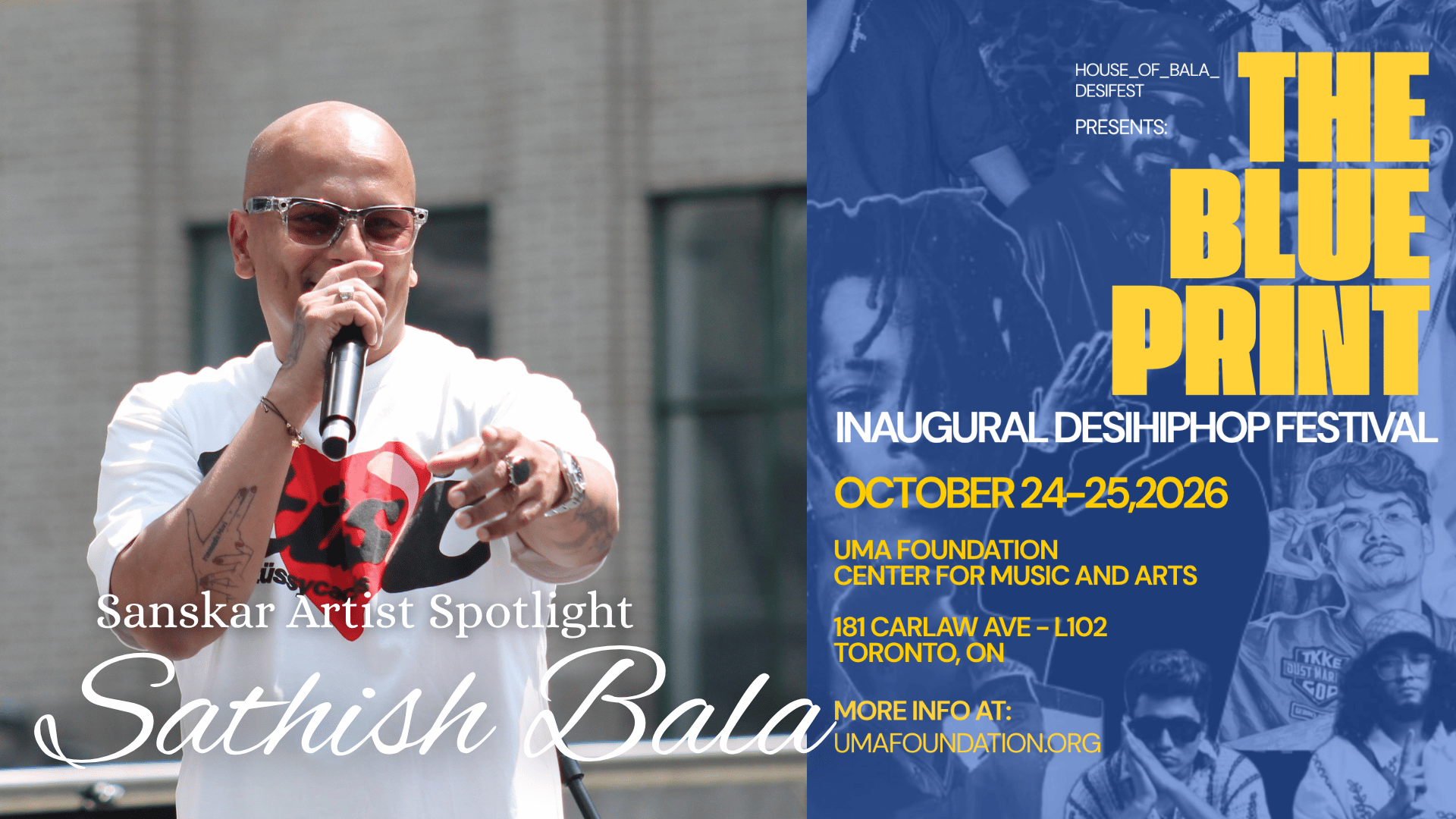
Getting your music heard is one challenge. Understanding who owns it, how you get paid, and what it takes to build a lasting career is another. Those questions are at the heart of “The Blueprint Inaugural DesiHipHop Festival,” coming to Toronto on Oct. 24-25, 2026.
The UMA Foundation is organizing the two-day event, which brings together South Asian artists, producers, songwriters, DJs, managers, and music industry professionals for practical workshops, industry conversations, and creative sessions. The focus is on giving artists the knowledge, connections and resources to take greater control of their careers.
For Sathish Bala, founder of DESIFEST and the UMA Foundation, the event builds on over two decades of creating opportunities for South Asian musicians in Canada. In an exclusive interview with Sanskar Savvy, Bala, also known as Sats B, shared what inspired “The Blueprint,” why ownership and industry knowledge matter, and how he sees Desi hip-hop evolving.
More Than a Traditional Music Conference
“The Blueprint” is designed to address the questions artists face when trying to turn their creative work into a career. Its programming covers music rights, funding, artist branding, festival bookings, and songwriting, connecting participants with professionals who understand the business behind the music.
The weekend also celebrates hip-hop culture through a live cypher, a look at Toronto’s hip-hop history, and a screening of the “Mumbai Cypher” documentary, followed by a filmmaker Q&A. Together, the sessions bring industry education and artistic expression into the same space.
Bala explained that what makes the event different is the chance for emerging artists to learn directly from established professionals while connecting with the people who helped build the culture.
“For me, the business and the culture have to grow together,” Bala told Sanskar Savvy.
That philosophy shapes the festival’s approach. Whether an artist is preparing to release a first project, exploring funding opportunities, or trying to secure more performances, the goal is to make industry knowledge more accessible and immediately useful.
From Creating Stages to Building Careers
Bala’s commitment to developing South Asian talent began well before “The Blueprint.” When he launched DESIFEST in 2007, he prioritized creating a platform for Canadian South Asian artists struggling to find recognition and performance opportunities.
Over time, DESIFEST grew into one of Toronto’s established celebrations of South Asian music. But Bala recognized that providing a stage was only one part of helping an artist succeed.
“Artists need to understand the business, know how to protect their work, access funding, and build sustainable careers,” he said.
For emerging musicians, that knowledge can influence everything from signing contracts to collecting royalties and choosing the right professional relationships. Bala believes talent remains essential, but artists also need to understand the decisions being made around their work.
“You need to understand what you own, how you get paid, what you’re signing and how to recognize opportunities that make sense for you.”
It’s a practical message for independent creators. An artist may have the music and an audience, but understanding the business can determine whether those opportunities lead to a sustainable career.
Building an Industry That Supports Its Own Artists
One of Bala’s strongest messages is that South Asian artists and industry professionals need to take a more active role in building their own infrastructure.
For years, he explained, Canadian South Asian artists were expected to demonstrate that an audience existed before traditional industry players would consider investing in them. Platforms like DESIFEST helped create opportunities, but Bala believes the next stage requires stronger networks, mentorship and business resources.
“It means building enough of our own platforms, networks and resources that we’re not waiting for someone else to validate what we’re doing.”
That doesn’t mean excluding traditional record labels, media outlets or industry partners. Instead, Bala sees community-built platforms as a way for artists to enter those relationships with greater knowledge, stronger businesses and more control over their direction.
The UMA Foundation’s expanding work reflects that approach. Alongside events such as DESIFEST and “The Blueprint,” the organization has opened the UMA Centre in Toronto, providing a creative space for artists, workshops and community programming throughout the year.
What’s Next for Desi Hip-Hop?
Desi hip-hop has developed an international audience, with artists bringing together different languages, musical influences and cultural identities. For Bala, the next challenge is ensuring that growth translates into meaningful opportunities for the people creating the music.
“I think the next chapter is about moving from visibility to sustainability,” he said.
That means investing more in artists, strengthening industry relationships, expanding international performance opportunities, and creating better pathways for musicians to earn a living from their work.
Bala also sees Toronto as an important part of the genre’s future. With its established South Asian creative community and growing network of artists and industry professionals, the city can help shape what comes next.
But commercial growth is only part of his vision. Preserving the originality, cultural identity, and community that helped define Desi hip-hop remains just as important.
Beyond the Two-Day Experience
For Bala, “The Blueprint’s” success won’t be measured solely by how many people attend workshops or participate in sessions. He hopes artists leave with something they can apply to their next project, whether that’s a better understanding of publishing, a new collaborator, a funding opportunity, or a valuable industry connection.
His long-term vision is for “The Blueprint” to become a continuing source of mentorship, knowledge, and professional opportunities rather than simply an annual event.
“We’ve spent years building stages and creating visibility,” Bala said.
Now, he’s focused on helping artists build what comes after those stages. If “The Blueprint” succeeds in creating relationships and opportunities that continue beyond the weekend, it could become another important part of supporting Canada’s next generation of South Asian music creators.
Want to be part of “The Blueprint”? The festival takes place Oct. 24-25 in Toronto. Visit the Sanskar Savvy event listing for details and tickets.
Sanskar Savvy is also giving one lucky winner a pair of tickets. Enter the giveaway by Oct. 22 for a chance to attend.