Published:
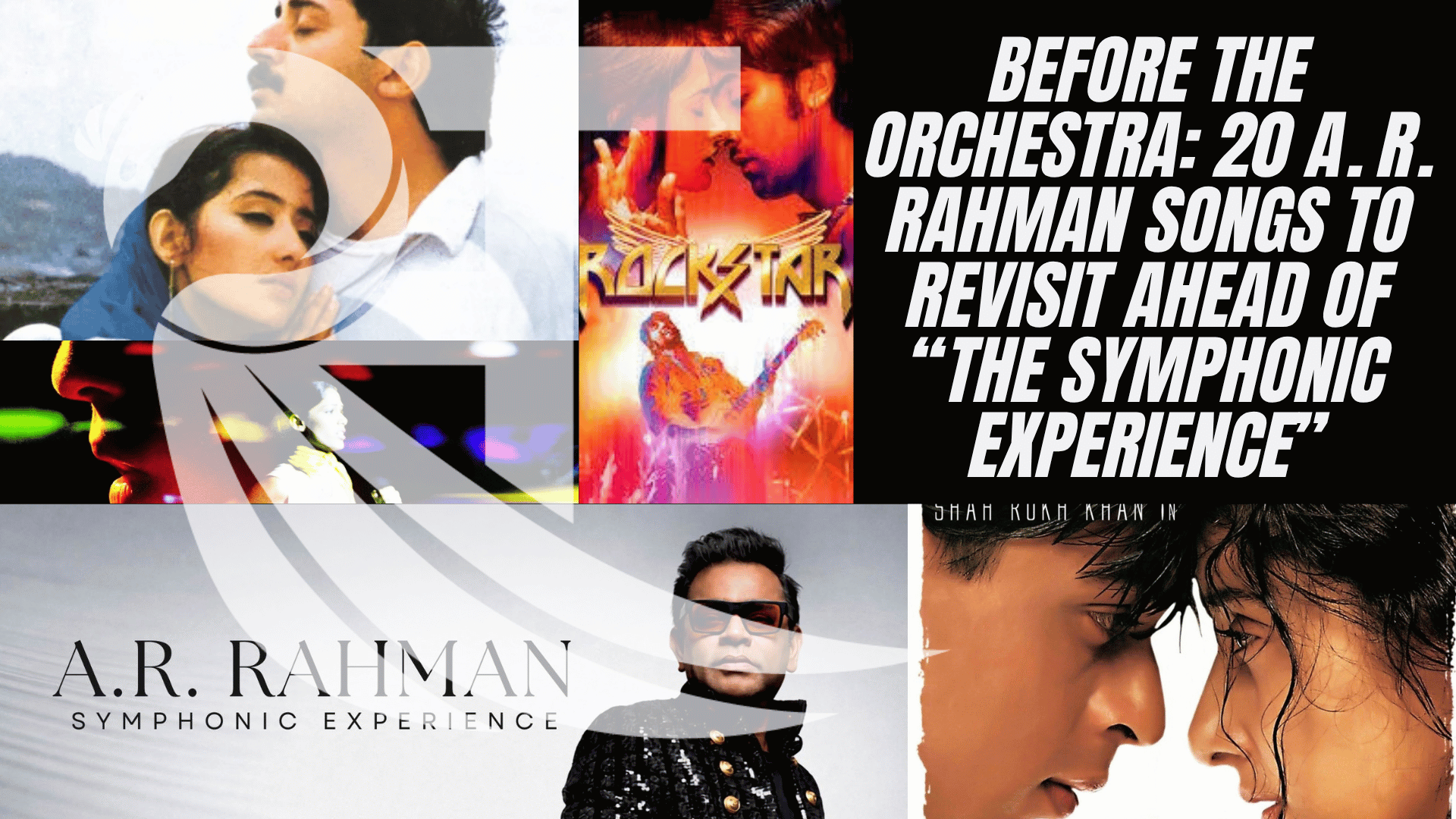
Before the Orchestra: 20 A.R. Rahman Songs to Revisit Ahead of “The Symphonic Experience”
There are A.R. Rahman songs you remember for the melody. Others, you remember for exactly where you were when you first heard them.
That has always been part of Rahman’s appeal. His music can fill a stadium, but some of his most memorable work begins quietly: a voice, a piano line, the first few notes of a flute. Then the song opens up. Strings arrive. Percussion shifts underneath it. A chorus appears where you did not expect one. By the end, the arrangement feels several sizes larger than it did at the start.
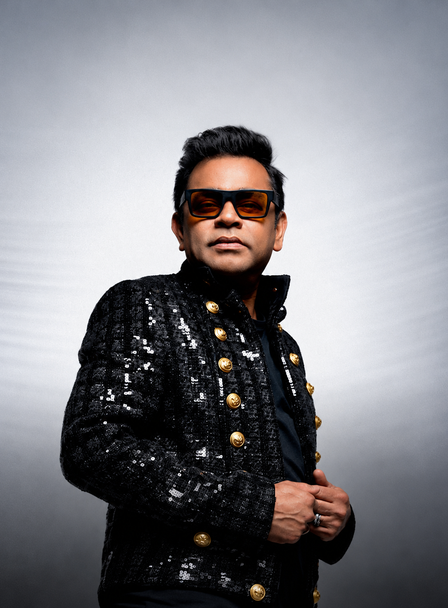
That sense of scale makes this fall’s A.R. Rahman: “The Symphonic Experience” an especially fitting way to hear his catalog. Rahman returns to U.S. stages with an orchestra behind music that has spent more than three decades moving between Indian classical traditions, electronic production, Sufi influences, pop and folk while continually reshaping the sound of Indian film music.
And his catalog is enormous. So rather than attempt another definitive ranking of Rahman’s “best” songs, consider this a listening list for the moment: 20 tracks worth revisiting before the upcoming shows. Some are obvious choices. A few come from his more recent work. Others are here because they reveal something different when you pay attention to the arrangement underneath the vocals.
This is not a predicted set list. Think of it instead as a 20-song journey through the sounds, eras, and arrangements that make Rahman’s catalog so rewarding to revisit.
The Playlist
1. “Chinna Chinna Aasai” / “Chhoti Si Aasha” — “Roja”
Start at the beginning. The playfulness, percussion, and melodic clarity of Rahman’s breakthrough still sound remarkably fresh more than three decades later.
2. “Roja Jaaneman” — “Roja”
This is romantic Rahman before “romantic Rahman” became shorthand for a whole genre. Expansive and restrained at once, the melody remains instantly recognizable.
3. “Bombay Theme” — “Bombay”
No lyrics needed. Few pieces make a stronger case for Rahman as a film composer rather than simply a creator of hit songs.
4. “Tu Hi Re” / “Uyire” — “Bombay”
The melody already feels cinematic in its original form. Its emotional rise and sweeping arrangement also make it an especially interesting song to reconsider through a symphonic lens.
5. “Kehna Hi Kya” — “Bombay”
Intricate without feeling crowded, the vocals take the spotlight while an entire world unfolds underneath them. It is the kind of arrangement that rewards listening beyond the melody.
6. “Mukkala Mukkabala” — “Kadhalan”
A Rahman playlist cannot live entirely in introspection. This is the eccentric, experimental and completely fearless side of his 1990s sound.
7. “Chaiyya Chaiyya” — “Dil Se..”
The opening percussion alone is enough to recognize it. Nearly three decades later, “Chaiyya Chaiyya” remains one of those songs that needs almost no introduction.
8. “Dil Se Re” — “Dil Se..”
Restless and dramatic, the song is driven by Rahman’s vocal performance, which gives it an urgency a more polished delivery might have lost. The arrangement continually pushes forward with him.
9. “Taal Se Taal” — “Taal”
This is one of Rahman’s richest arrangements. Melody, rhythm, and orchestration keep trading places, which is exactly why it is worth hearing again before a concert built around the possibilities of an orchestra.
10. “Yeh Jo Des Hai Tera” — “Swades”
Rahman does not oversell the emotion here. He lets the melody carry it, and that restraint is precisely what makes the song land.
11. “Tere Bina” — “Guru”
Warm, intimate, and deceptively layered, “Tere Bina” shows Rahman at his most romantic without becoming overly polished. The vocals command attention, but the arrangement gives them room to breathe.
12. “Jashn-E-Bahaaraa” — “Jodhaa Akbar”
The song is built on elegance rather than excess. Javed Ali’s vocals sit beautifully against one of Rahman’s most graceful compositions.
13. “Kun Faya Kun” — “Rockstar”
This is the kind of track that changes in a room full of people. It begins as a song and gradually becomes something closer to a communal experience.
14. “Nadaan Parindey” — “Rockstar”
Where “Kun Faya Kun” finds stillness, “Nadaan Parindey” keeps reaching. Mohit Chauhan and Rahman give the soundtrack one of its most emotionally charged moments, with an arrangement that seems to keep searching alongside them.
15. “Agar Tum Saath Ho” — “Tamasha”
This later-period classic proves Rahman never needed a massive arrangement to create impact. Sometimes the ache is in what he leaves out.
16. “Jai Ho” — “Slumdog Millionaire”
Yes, it is the obvious inclusion, but there is a reason it remains unavoidable. Percussive, immediate, and built to grow with the room, “Jai Ho” still feels designed for a live audience.
17. “Nee Singam Dhan” — “Pathu Thala”
Rahman’s newer catalog deserves room beside the nostalgia. Sid Sriram’s vocal gives the track a slow-building intensity, while the production gradually expands around him rather than revealing everything at once.
18. “Ishq Mitaye” — “Amar Singh Chamkila”
Rawer and more rhythm-driven than the sweeping Rahman sound some listeners might expect, “Ishq Mitaye” belongs to the film’s particular musical world. At the same time, it shows how comfortably Rahman can reshape his sound without losing his identity.
19. “Muththa Mazhai” — “Thug Life”
“Muththa Mazhai” moves through atmosphere as much as melody, with a lush, cinematic quality that builds its drama gradually. It also reminds us that Rahman’s recent work can feel contemporary without simply chasing whatever sound is having a moment.
20. “Aaya Re Toofan” — “Chhaava”
End with Rahman in full-scale mode. Percussion, voices and sheer momentum turn the track into something that already feels built for the energy of a live audience.
Three decades into his career, Rahman’s music has an unusual advantage: nostalgia hasn’t frozen it in place.
You can hear “Roja” beside “Rockstar,” move from “Bombay” to “Amar Singh Chamkila,” and then arrive at “Chhaava” without feeling as though you have been listening to the same composer repeating the same decade. The fingerprints are there, but the sound keeps moving.
That may be the best reason to revisit these songs before “The Symphonic Experience.” The symphonic format may make familiar music feel bigger, but the more interesting question is what it might reveal in songs we thought we already knew.